In an era where smartphones seem to do everything, including navigating through the wilderness, it’s easy to forget the tools that have guided generations of adventurers: a map and a compass.
But here’s the kicker. GPS fails. Batteries die. Signals vanish. That’s why knowing how to navigate using traditional tools is a critical skill for any bushwalker, especially beginners. Not only does it keep you safe, it gives you a deeper connection to the land and your journey.
This guide breaks down the essentials. Why analogue navigation matters, how to get started, what tools to trust, and how to build lasting confidence with every step you take. Let’s get Offtrack and navigate the wild like a pro.
Ready to Navigate? Learn the Basics in 15 Minutes
[Conversion Goal: Link to map & compass gear category]
The fundamentals of topographic maps and compass use
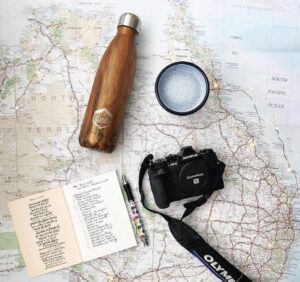
Before you head bush, you need to know what you’re looking at. A topographic map isn’t just a colourful poster of the bush. It’s a detailed representation of the landscape’s contours, water sources, elevation, and man-made features. Learn to read the squiggly lines and symbols, and you’ll know if your walk includes steep climbs or gentle valleys.
Next, enter the compass. Start with a Silva baseplate model. It’s accurate, easy to use, and made for outdoor learning. Begin by learning how to orient your map using your compass. This aligns the map with the terrain, making it far more straightforward to read your surroundings.
Once your map is oriented, use the compass to take a bearing. This tells you which direction to travel from point A to point B. From there, you can plot a route, estimate travel time, and stay in control even if the trail markings fade.
For a clear step-by-step guide, check out the Appalachian Mountain Club’s tips on how to navigate by map and compass.
Offtrack stocks beginner-friendly gear from Silva and reliable Rooftop or Spatial Vision maps. We also offer waterproof map cases to protect your tools in all weather conditions.
Avoid Getting Lost: Common Navigation Errors Beginners Make
Bushwalking mistakes that even seasoned hikers slip up on
Do you think you’re safe just because you’ve a GPS app? Think again. Over-reliance on smartphones is the number one mistake we see. Even with great apps, losing signal or battery power turns your high-tech gadget into a paperweight.
Another rookie error? Only looking at the map at the start. Navigation isn’t a once-and-done job. You need to check regularly to track your progress and adjust for detours, terrain challenges, or unexpected changes.
And here’s a surprising one. Lots of bushwalkers skip backup tools altogether. Forgetting a compass, not bringing a map case, or neglecting extra batteries can turn a simple walk into a stressful scramble.
At Offtrack, we don’t just sell navigation gear. We teach best practices. Our team of outdoor educators has been in the field, and we’re here to make sure you never have to learn these lessons the hard way.
Build Trail Confidence with Navigation Drills
[Conversion Goal: Drive Gear List service or beginner navigation kit]
Easy practice techniques to sharpen your outdoor nav skills
Want to feel confident before you hit a remote trail? Start small. Take a local map of your nearest park, and practise orienting it with a compass. Identify landmarks, find your location, and trace routes between points.
Then level up with a simple drill. Try walking a short bush track using only your map and compass. No phone. Note how terrain changes match the map’s contours. Spot elevation changes, water crossings, or forest clearings.
You can also try plotting bearings between known locations, such as a hilltop and a waterhole. Then walk the bearing while checking your progress against real-world features.
These exercises are surprisingly fun. They’ll build your skills faster than you’d expect. Offtrack’s Gear List service can even curate beginner-friendly navigation kits for schools, scout groups or first-time hikers. Perfect for those preparing for their first multi-day hike or running outdoor education programs.
New to Bushwalking? You’re Not Alone
Q1: Is it necessary to learn how to use a map and compass if I have a smartphone?
Absolutely. GPS fails more often than you’d think. Batteries run out, signals drop, and bushy canopies block reception. Knowing how to use a compass and a map is your backup and your confidence booster.
Q2: What’s the easiest way to start learning compass skills?
Grab a Silva compass and a basic topographic map of a local trail. Start by practising orientation and bearings in your backyard or a nearby park. Offtrack’s entry-level navigation kits make this easy.
Q3: Which maps should I bring on a multi-day hike?
Use detailed topographic maps, such as those from Rooftop or Spatial Vision. They offer trail-specific detail and scale clarity. Don’t forget a waterproof case. Rain, mud, and sweat can easily damage a paper map if it is not protected.
Next Step: Navigate Like You Mean It
Ready to move beyond “I hope this is the right trail”? With just a little knowledge and the right tools, you’ll be navigating confidently, enjoying the views, and not second-guessing your route.
Explore our curated collection of maps and compasses to find the perfect setup for you. Alternatively, if you’d like us to handle everything, try our Gear List service. Built by outdoor experts, personalised for your next adventure.
Let’s Get Offtrack. Because knowing where you’re going is just the beginning.