Choosing the right waterproof pack liner size starts with the gear you need to keep dry, not simply the capacity printed on your backpack.
An 80L backpack does not automatically need an 80L waterproof pack liner.
Backpack capacity measures the total space available, while a liner only needs to hold the equipment you want to protect from moisture.
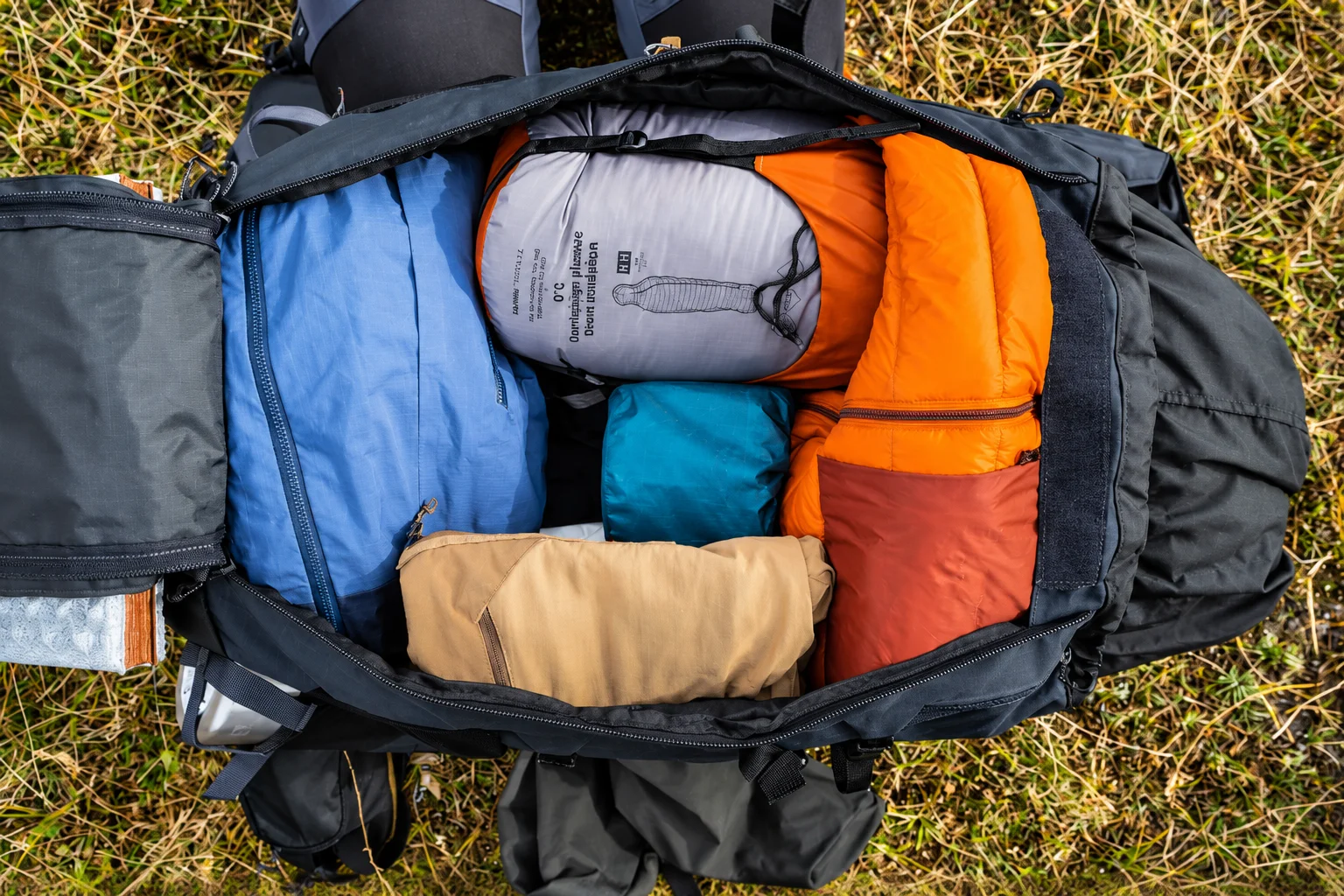
For most bushwalkers, that includes a sleeping bag, spare clothing and insulating layers. Other items, such as tent poles, water bottles or equipment that can tolerate moisture, may be carried elsewhere in the pack.
The right liner size depends on how much dry gear you carry, how bulky it is and whether there’s enough material left to secure the closure properly.
Offtrack stocks Wilderness Equipment Pack Liners in 60L, 80L, 100L and 120L capacities.
Here’s how to compare the four sizes and decide which one suits your packing needs.
Choose Your Waterproof Pack Liner Around the Gear You Need to Keep Dry
Your backpack’s capacity is a useful starting point, but the equipment you want to protect should guide the final decision.
Start by identifying the items that need to remain dry throughout your trip.
These will often include:
- Sleeping bag
- Spare clothing
- Insulating layers
- Electronics
- Maps and other moisture-sensitive equipment
Items that do not require waterproof protection can stay outside the main liner.
This explains why two bushwalkers using similar backpacks may choose different liner capacities. One may keep most of their equipment inside a single liner, while another only protects sleeping gear and dry clothing.
Consider your normal packing arrangement and the amount of protected space you actually need.
Leave Enough Room to Close the Liner Properly
A liner needs spare material above the contents to allow its closure to work as intended.
The Wilderness Equipment pack liner uses a non-wicking, drybag-style closure. Its construction includes seam-taped 70D nylon with a stated 10,000 mm hydrostatic-head waterproof specification.
Because the opening rolls closed, some of the liner’s height must remain available after packing.
Avoid choosing a size that only accommodates your equipment when filled completely to the top.
If your regular dry load prevents the closure from operating properly, consider the next available capacity.
60L Waterproof Pack Liner: A Practical Starting Point for Compact Loads
A 60L waterproof pack liner is worth considering when the equipment you need to protect is relatively compact.
It does not have to be paired with a 60L backpack.
A larger backpack may still accommodate a 60L liner if only part of the load requires waterproof protection.
For example, you might carry sleeping gear, spare clothing and insulating layers inside the liner while keeping other equipment outside it.
The 60L Wilderness Equipment liner has the following listed dimensions:
- Open height: 890 mm
- Closed height: 580 mm
- Width: 408 mm
- Depth: 254 mm
- Listed weight: 144 g
These measurements provide a more useful reference than capacity alone, particularly when checking how the liner will sit inside your backpack.
If your normal dry gear fits comfortably and the top can close correctly, a 60L liner may provide enough protected space without unnecessary excess material.
80L Pack Liners Give Bulkier Loads More Working Room
An 80L pack liner becomes worth considering when your protected equipment takes up more space.
Cold-weather trips are one example. A bulkier sleeping bag, additional clothing and extra insulating layers can increase the volume of gear that needs to stay dry.
Longer trips may also require more protected storage, depending on the equipment being carried.
The Wilderness Equipment 80L liner measures:
- Open height: 940 mm
- Closed height: 680 mm
- Width: 428 mm
- Depth: 274 mm
If you’re deciding between 60L and 80L, compare the sizes against your largest realistic dry load.
A compact summer setup may fit inside a 60L liner, while equipment for colder conditions could require more room.
The larger capacity is useful when it solves an actual packing problem, particularly if the smaller liner becomes difficult to close once loaded.
When a 100L Pack Liner Makes Sense
A 100L waterproof pack liner provides substantially more capacity for equipment that needs protection from moisture.
It may suit larger bushwalking setups, expedition equipment or bulky group gear where a considerable amount of kit needs to remain dry inside one compartment.
The Wilderness Equipment 100L liner measures:
- Open height: 990 mm
- Closed height: 760 mm
- Width: 448 mm
- Depth: 294 mm
A 100L liner becomes worth considering when smaller capacities consistently leave insufficient room for your protected equipment.
However, a larger liner is not automatically a better choice.
Check whether the additional capacity is necessary and whether the liner will fit comfortably inside your backpack once packed.
If your dry gear fits properly inside a smaller liner, the extra material may offer little practical benefit.
When Does a 120L Pack Liner Make Sense?
The 120L Wilderness Equipment pack liner is the largest option in this range.
It’s worth considering when a substantial amount of bulky equipment needs to stay dry inside one protected compartment.
Possible uses include large expedition loads, communal equipment or other packing arrangements involving a high volume of moisture-sensitive gear.
The Wilderness Equipment 120L liner measures:
- Open height: 1040 mm
- Closed height: 820 mm
- Width: 468 mm
- Depth: 314 mm
Its larger dimensions provide additional room, but that capacity only helps if your equipment genuinely requires it.
The liner also needs to fit sensibly inside the backpack.
If your protected gear fits comfortably in an 80L or 100L liner, there is no need to choose 120L simply because it’s available.
60L vs 80L vs 100L vs 120L: Compare the Sizes
The most useful way to compare waterproof pack liner sizes is to look at both their dimensions and the amount of dry gear you carry.
Wilderness Equipment lists different open and closed heights for each capacity, reflecting the material used when securing the roll-style closure.
The table below brings the main specifications and sizing considerations together.
| Liner size | Open height | Closed height | Width × depth | What to consider |
| 60L | 890 mm | 580 mm | 408 × 254 mm | Compact protected loads where sleeping gear and clothing fit comfortably |
| 80L | 940 mm | 680 mm | 428 × 274 mm | Bulkier sleeping gear, spare clothing or additional insulation |
| 100L | 990 mm | 760 mm | 448 × 294 mm | Large protected loads or bulky expedition equipment |
| 120L | 1040 mm | 820 mm | 468 × 314 mm | Very high-volume protected loads that genuinely need additional capacity |
These are practical sizing considerations, not fixed recommendations for particular backpack capacities.
Wilderness Equipment states that its liners can be used with any brand of backpack, although their proportions are designed around Wilderness Equipment pack volumes.
Before ordering, compare the relevant dimensions with your backpack and consider how the liner will fit once loaded.
If you’re also reviewing your backpack or related equipment, browse Offtrack’s Packs & Bags range.
Waterproof Construction Matters Too
Choosing the right capacity is important, but the liner also needs to protect your equipment when conditions turn wet.
The Wilderness Equipment pack liners stocked by Offtrack are described as 100% waterproof and feature seam-taped construction.
They use 70D nylon with a stated 10,000 mm hydrostatic-head waterproof specification and a non-wicking, drybag-style closure.
According to the Australian Bureau of Meteorology’s 2025 Annual Climate Statement, Australia’s nationally averaged rainfall reached 503 mm in 2025, 8% above the long-term average. With rainfall conditions varying considerably across Australian regions, bushwalkers should consider the weather expected along their route when deciding which equipment requires waterproof protection.
A light internal coating also helps make equipment easier to see inside a dark backpack.
These features are particularly relevant when protecting sleeping bags, spare clothing and other items that can be difficult to dry during a multi-day trip.
Not everything in your backpack needs to sit inside the liner.
Equipment that tolerates moisture can remain outside the protected compartment. Items you need frequently may also be more conveniently stored elsewhere, depending on their waterproofing requirements.
The aim is to protect the gear that matters without making your packing system unnecessarily complicated.
Before You Order, Pack Your Backpack Once
A practical packing test can help narrow your choice before buying.
Start by loading your backpack with the equipment you would normally carry on the type of trip you’re planning.
Then identify the items that need waterproof protection.
Pay particular attention to bulky soft gear, including:
- Sleeping bags
- Insulated jackets
- Spare clothing
- Other equipment that needs to remain dry
These items can occupy considerable space without adding much weight.
Consider the largest realistic load you’re likely to carry.
For example, a light summer overnight setup may not be the best reference if most of your trips involve colder conditions or additional equipment.
Once you’ve identified your protected load, ask three questions:
- Does the equipment fit comfortably without being forced?
- Is there enough material remaining to secure the liner’s closure?
- Will the packed and closed liner fit sensibly inside your backpack?
If the answer to all three is yes, the capacity may be suitable for your needs.
If you don’t already own the liner, use your equipment volume, backpack dimensions and the product’s published measurements to narrow the options before purchasing.
Checking these details beforehand is more reliable than selecting a liner solely because its litre rating matches your backpack.
Choose the Pack Liner That Fits the Way You Actually Pack
The best waterproof pack liner size is the one that accommodates your essential dry gear while allowing the liner to close correctly.
A compact protected load may suit a 60L liner.
Bulkier sleeping equipment, clothing or insulation may make 80L more practical.
Larger expedition loads or group equipment may justify 100L or 120L, provided the additional capacity is genuinely required.
Your backpack’s capacity remains useful, but the volume and shape of your protected equipment should guide your choice.
Offtrack stocks Wilderness Equipment Pack Liners in 60L, 80L, 100L and 120L sizes.
Unsure Which Waterproof Pack Liner Size to Choose?
If you’re deciding between two sizes, contact the Offtrack team.
Tell us which backpack you use, what equipment you normally carry and the type of trips you’re preparing for.
We can help you narrow down the available options before you head out.
Waterproof Pack Liner Size FAQs
Should My Pack Liner Be the Same Capacity as My Backpack?
Not necessarily.
Backpack capacity is a starting point, but your liner should be chosen according to the amount of equipment requiring waterproof protection.
The packed liner also needs to fit inside the backpack and close correctly.
Can I Use an 80L Liner Inside a Smaller Backpack?
Possibly, provided the packed liner fits comfortably inside the backpack.
However, excess material may make packing less convenient if your protected load is relatively small.
Compare the liner’s dimensions with your backpack rather than relying on litre ratings alone.
What Happens if My Pack Liner Is Too Small?
A liner that’s too small may become difficult to pack or leave insufficient material for the closure.
If your equipment reaches the opening before you can secure it correctly, consider a larger capacity or review how you’ve organised the load.
Is a 100L Pack Liner Too Large for Ordinary Bushwalking?
It depends on your equipment.
A 100L liner may be unnecessary for a compact load, but it could be useful when carrying substantial amounts of bulky clothing, sleeping gear or expedition equipment.
Choose according to the space your protected gear requires.
When Should I Consider a 120L Pack Liner?
Consider a 120L liner when your protected load is genuinely high-volume and smaller sizes do not provide enough practical space.
Check that the liner will fit your backpack before purchasing.
Are Wilderness Equipment Pack Liners Waterproof?
Wilderness Equipment describes these liners as 100% waterproof and seam-taped.
Their stated construction includes 70D nylon, a 10,000 mm hydrostatic-head waterproof specification and a non-wicking, drybag-style closure.
Correct packing and closure remain important.
What if I Still Can’t Decide Between Two Sizes?
Compare the dimensions of both liners against your backpack and the equipment you need to keep dry.
If the smaller size is likely to be difficult to close when packed, the larger capacity may be more practical.
You can also contact Offtrack for help choosing your gear.