A waterproof backpack liner gives your essential gear a separate layer of protection, even when rain gets through the outer backpack. But do you need one if your backpack is already waterproof?
The answer depends on what you’re carrying, the conditions you’re walking in and how much you rely on keeping particular equipment dry.
Some bushwalkers use a waterproof backpack as their main weather barrier. Others place a waterproof liner inside a conventional hiking pack. For longer trips or sustained rain, combining different layers of protection may be worth considering.
Each approach has its advantages. A waterproof backpack can simplify access and reduce the need for separate storage, while an internal liner creates a protected compartment for sleeping gear, spare clothing and other moisture-sensitive equipment.
The aim isn’t to add as many waterproof layers as possible. It’s to give the gear that matters most the protection it needs.
Start With the Gear You Cannot Afford to Get Wet
Not everything in your backpack needs the same level of waterproof protection.
A damp cook set may be inconvenient. A wet sleeping bag can cause much greater problems, particularly when you’re spending several nights outdoors.
Spare thermal layers, insulated clothing, maps, electronics and first aid supplies may also need protection, depending on your trip.
Start by separating your gear into two groups:
- Gear that must stay dry: Sleeping equipment, spare insulation and other items where moisture could seriously affect their usefulness.
- Gear that can tolerate some moisture: Equipment that won’t be significantly affected by getting damp or can be managed separately.
This distinction helps determine how much waterproofing your packing system needs.
For a short walk in mild conditions, a suitably weather-resistant or waterproof backpack may provide enough protection. On an extended bushwalk where dry sleeping gear and insulation are essential, a separate internal waterproof barrier becomes more valuable.
Trip duration matters too. Several days of wet weather place different demands on pack fabrics, seams, closures and packing habits than a brief shower.
The important question is what happens if water gets through your main weather barrier.
What a Waterproof Backpack Gives You
A waterproof backpack places the primary weather barrier on the outside of the carrying system.
This can simplify packing because the backpack itself provides protection from rain. Depending on its construction and intended use, you may need fewer separate waterproof compartments.
Access can also be easier. You can use the pack’s normal openings and compartments without having to open a large internal liner whenever you need something.
However, not every backpack described as waterproof offers the same construction or level of protection.
Fabric, seam treatment, zips, closure design and access points can all affect how well a backpack prevents water from reaching its contents.
Before relying on a waterproof backpack to protect important equipment, check the specifications of the particular model.
Offtrack’s Packs & Bags range includes different pack designs, brands and capacities, making it useful to consider your complete carrying setup rather than waterproofing alone.
Fewer Layers Can Make Access Easier
One advantage of relying on a waterproof backpack is convenience.
Frequently used equipment can remain in the pack’s normal compartments without an additional liner closure between you and your gear.
This may suit shorter walks, mixed weather or trips where your equipment doesn’t require multiple levels of protection.
The trade-off is greater reliance on the backpack itself.
If water gets through the pack’s main barrier, items without separate protection have fewer safeguards.
For gear that must remain dry, it’s worth considering whether an internal waterproof layer would provide useful additional protection.
What a Waterproof Backpack Liner Changes
A waterproof backpack liner creates a protected compartment inside your backpack.
The outer pack continues to carry the load, provide suspension and organise your equipment. The liner takes responsibility for protecting the contents placed inside it.
This means the backpack doesn’t have to be your only defence against moisture.
The Wilderness Equipment pack liners stocked by Offtrack are designed to work with any brand of backpack, although their volumes are based around Wilderness Equipment pack sizes.
The range includes 60L, 80L, 100L and 120L options.
These liners use seam-taped 70D nylon with a stated waterproof rating of 10,000 mm hydrostatic head (HH), along with a non-wicking, drybag-style closure.
That construction provides a separate waterproof barrier around the equipment inside the liner.
One Protected Zone Keeps Bulky Dry Gear Together
A large pack liner is particularly useful for keeping bulky equipment together, including:
- Sleeping bags
- Spare clothing
- Insulating jackets
- Other soft equipment that needs to remain dry
Instead of placing every item into an individual dry bag, you can organise your main dry load inside one protected compartment.
This creates a straightforward packing system: equipment that must stay dry goes inside the liner, while items that tolerate moisture can be managed separately.
The liner must still be packed and closed correctly.
If you fill it so tightly that there isn’t enough material left to secure the roll-style closure as intended, you may compromise the protection it is designed to provide.
Choosing a suitable size and leaving enough room to close it properly are therefore just as important as the waterproof material itself.
Waterproof Backpack vs Pack Liner: Compare the Whole System
A waterproof backpack and an internal pack liner protect equipment in different ways.
A waterproof backpack places the primary barrier around the outside of the load. A liner creates a waterproof compartment inside the carrying system.
The differences become clearer when you compare how each approach works.
| Consideration | Waterproof backpack | Waterproof backpack liner |
| Main waterproof barrier | Built into the outer backpack | Separate compartment inside the backpack |
| Access to equipment | Through the backpack’s normal openings | Requires opening the liner to reach protected gear |
| Reliance on outer pack construction | Greater reliance on the pack’s waterproof design | Less reliance on the outer pack for gear inside the liner |
| Gear organisation | Uses existing pack compartments | Creates one main protected dry zone |
| Replacement | Waterproofing is part of the backpack | Liner can be replaced separately |
| Main buying consideration | Whether the pack’s construction suits expected conditions | Whether the liner fits the pack and the gear requiring protection |
Neither approach is automatically the better choice.
A waterproof backpack may suit someone who values convenient access and has confidence in the pack’s construction for the expected conditions.
An internal liner may suit someone who already has a comfortable backpack and wants to protect essential equipment without replacing the entire carrying system.
The deciding factor is where you want the waterproof barrier and how much protection your equipment requires.
Layered Waterproofing Makes Sense Once the Consequences Rise
You don’t have to choose between a waterproof backpack and an internal liner.
Both can work together when additional protection serves a clear purpose.
The Tasmania Parks and Wildlife Service recommends carrying a large waterproof hiking pack plus a pack liner for multi-day bushwalks. Its equipment guidance also specifies sleeping bags rated to at least 0°C for coastal walks and −10°C for alpine conditions. These recommendations highlight the importance of keeping essential sleeping equipment protected from moisture, particularly in colder environments.
For example, a multi-day bushwalker expecting prolonged rain might use three levels of protection:
-
Outer protection: The backpack carries the load and provides the first barrier against weather and abrasion.
-
Main dry zone: A waterproof backpack liner protects sleeping equipment, spare clothing and other bulky gear.
-
Selective secondary protection: Smaller waterproof bags protect items such as electronics, first aid supplies or navigation equipment where additional protection is justified.
This approach creates redundancy without requiring every piece of equipment to be wrapped in multiple waterproof layers.
The important distinction is whether the added protection solves a meaningful problem.
For a short walk close to an easy exit, a complicated waterproofing system may be unnecessary. On a remote trip where wet insulation or failed electronics could create serious difficulties, additional barriers may be worthwhile.
A Pack Cover Protects the Outside in a Different Way
A backpack rain cover is another option, but it performs a different job from an internal liner.
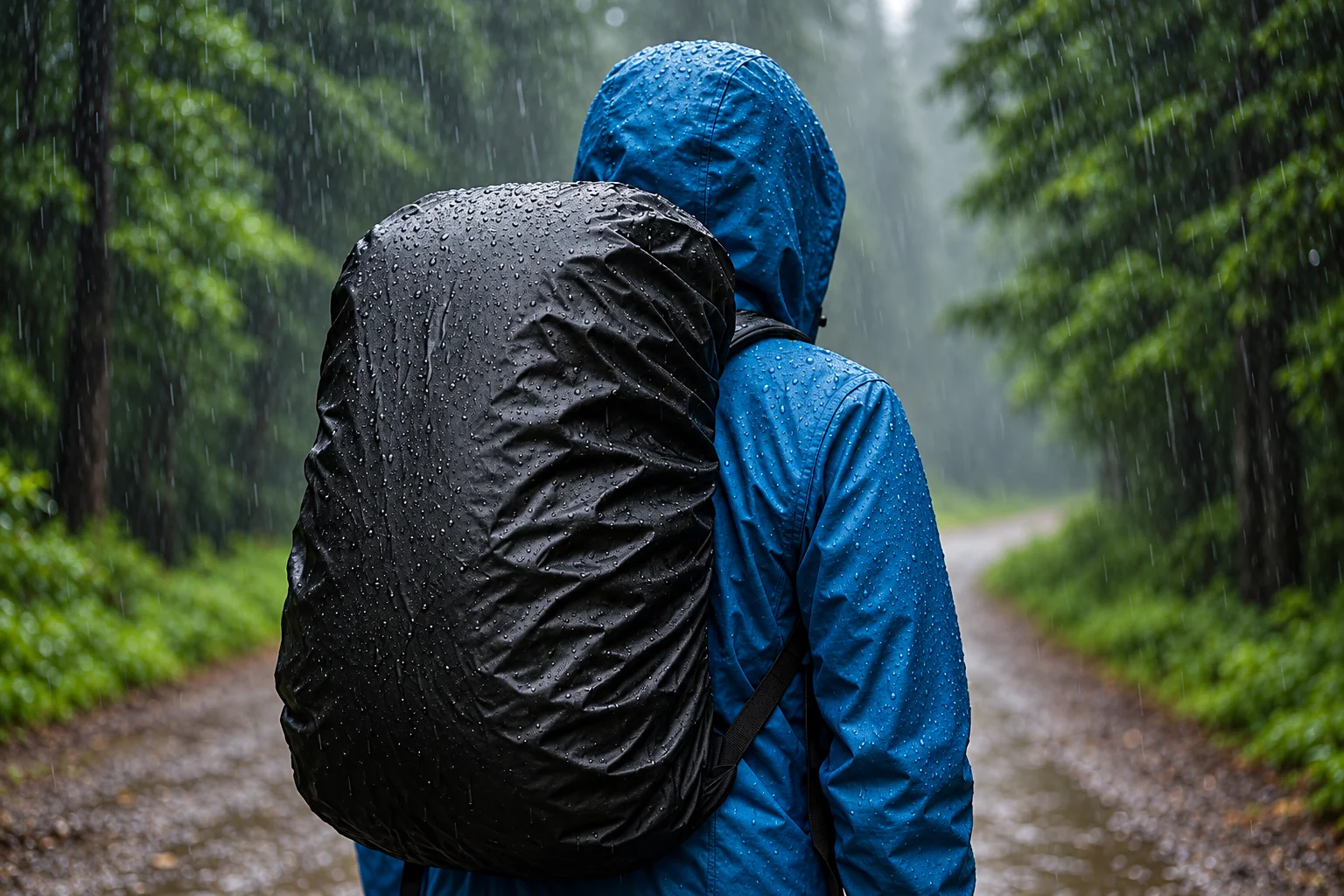
A rain cover fits over much of the outside of the backpack, helping reduce direct exposure to rainfall.
It doesn’t necessarily seal the entire pack. The back panel, shoulder straps and other exposed areas can remain vulnerable to moisture.
An internal liner, by comparison, protects selected contents inside the backpack, regardless of whether the outer material becomes wet.
Some bushwalkers use a rain cover, others prefer an internal liner, and some combine them.
Choose according to what needs protecting and how each layer contributes to the overall system.
Build the System Around the Conditions You Actually Walk In
The right wet-weather packing setup depends on the trip.
Short walks, overnight hikes and extended journeys through remote country place different demands on your equipment.
Cold conditions can also increase the importance of keeping sleeping gear and insulation dry.
Shorter Trips Can Support a Simpler Setup
For short day walks in mild conditions, a suitably protected backpack may be sufficient.
You might also use a small waterproof bag for electronics or spare clothing without lining the entire main compartment.
The priority is keeping essential equipment protected while maintaining convenient access to gear throughout the walk.
Adding waterproof layers that don’t address a genuine risk can make packing more complicated without delivering much practical benefit.
Extended Rain Raises the Standard
Several days of rain create more opportunities for moisture to enter a backpack.
Seams, openings and compartments may face repeated exposure, particularly when you’re regularly accessing equipment in wet conditions.
Once gear becomes wet, there may also be limited opportunity to dry it.
For longer trips, protecting sleeping equipment and spare insulation becomes especially important.
An internal pack liner provides a dedicated waterproof compartment for these items, reducing reliance on the outer backpack to keep everything dry.
For wet or remote bushwalking, this separation can make the packing system more dependable.
Choose the Right Waterproof Backpack Liner for Your Pack
Once you’ve decided to use an internal liner, the next consideration is selecting a size that suits your backpack and the equipment you want to protect.
The Wilderness Equipment pack liner range available through Offtrack includes four sizes:
- 60L
- 80L
- 100L
- 120L
The liners are designed to work with different backpack brands, although their listed volumes correspond to Wilderness Equipment pack sizing.
Rather than selecting a liner by capacity alone, consider how much of your equipment needs waterproof protection.
A liner used primarily for a sleeping bag and spare clothing has a different job from one intended to hold most of the main pack contents.
Your backpack’s internal shape and the amount of space needed to close the liner are also important.
Before settling on a size, check that the liner can accommodate your intended dry load while still allowing the closure to operate correctly.
You can view the available options in the Wilderness Equipment Waterproof Pack Liner range.
Wet-Weather Packing Works Better When Every Layer Has One Job
A good waterproofing system should remain practical when you’re tired, cold or packing in the rain.
Giving each part of the system a clear purpose makes it easier to organise equipment and avoid unnecessary handling.
For example:
- Sleeping bag: Store inside the main waterproof liner.
- Spare clothing and insulation: Keep together inside the protected dry compartment.
- Electronics and first aid supplies: Use additional waterproof storage where the trip justifies it.
- Wet shelter or rainwear: Position separately so moisture isn’t transferred onto equipment you’ve deliberately kept dry.
This arrangement also makes it easier to identify which items need protection before you start packing.
It avoids wrapping some equipment repeatedly while overlooking gear that may be more important to keep dry.
The result is a more practical system built around how you’ll actually use your equipment.
Test Your Packing System Before the Forecast Tests It for You
Even a well-chosen waterproofing setup can become awkward when the backpack is fully loaded.
A packing test at home helps identify problems before you’re dealing with wet weather on the track.
Pack your backpack with the equipment you would genuinely carry, including your sleeping bag, spare clothing, shelter, food and other essentials.
Then check the following:
- Can the liner close properly? Make sure there’s enough material available to secure the closure as intended.
- Can you reach frequently used items? Equipment needed throughout the day shouldn’t require repeatedly opening the entire dry compartment.
- Is there somewhere to store wet gear? Keep damp rainwear or shelter components from transferring moisture onto your dry equipment.
- Have you protected the right items? Check that sleeping gear, insulation and other important equipment have the waterproof protection you intended.
- Does the packing arrangement still work when the pack is full? Make sure the liner and other storage don’t interfere unnecessarily with access or organisation.
A waterproofing system needs to do more than resist water. It also has to work with your normal packing routine.
Finding a closure or access problem at home is much easier than discovering it during a wet overnight walk.
Choose Which Layer Will Carry the Waterproofing Job
A waterproof backpack, an internal liner or a combination of both can provide effective weather protection when matched to the equipment and conditions.
If you already own a comfortable backpack, adding a liner may be a practical way to create a separate dry compartment without changing your carrying system.
If you’re choosing a new backpack, consider its waterproof construction alongside capacity, access, organisation and carrying comfort.
For extended trips or conditions where keeping critical gear dry is especially important, layered protection may provide useful redundancy.
If you’re reviewing your complete setup, explore Offtrack’s Packs & Bags range.
If your existing pack suits your needs but you want a dedicated waterproof compartment, take a look at the Wilderness Equipment Pack Liners in 60L, 80L, 100L and 120L sizes.
Still unsure which setup will work with your gear? Contact Offtrack and tell us which backpack you use, what equipment needs to stay dry and the conditions you’re preparing for.
That provides a useful starting point for choosing a waterproofing system that suits your trip.
Frequently Asked Questions About Waterproof Backpacks and Pack Liners
Do I need a waterproof backpack liner if my backpack is already waterproof?
Not necessarily. It depends on the backpack’s construction, the expected conditions and what you’re carrying.
A liner is worth considering when you want a separate waterproof barrier around sleeping equipment, insulation or other items that must remain dry.
Is a waterproof backpack better than a normal backpack with a liner?
Neither system is automatically better.
A waterproof backpack integrates the main barrier into the outer pack, while a liner protects selected contents inside a conventional backpack.
Consider access, pack construction, weather exposure and the importance of keeping particular equipment dry.
Can I use a waterproof backpack and a pack liner together?
Yes. Using both provides another layer of protection around equipment stored inside the liner.
This may be worthwhile on longer or wetter trips where additional protection has a clear purpose.
Is a backpack rain cover the same as a waterproof backpack liner?
No. A rain cover reduces rain exposure on the outside of a backpack, while an internal liner creates a protected compartment inside it.
They perform different jobs and can be used individually or together.
How waterproof is the Wilderness Equipment pack liner?
The Wilderness Equipment pack liner stocked by Offtrack is described as 100% waterproof and features seam-taped 70D nylon with a stated 10,000 mm HH rating.
It also uses a non-wicking, drybag-style closure designed to protect the equipment stored inside.
As with any waterproof storage, correct packing and closure are important to achieving the intended protection.