A children’s climbing harness needs to fit securely today, not after the next growth spurt. Buying an oversized harness for future growth can compromise the fit that the equipment is designed to provide.
Children grow quickly, and it can be tempting to choose a harness with extra adjustment so it lasts another year or two. That may seem economical, particularly when a child is between sizes.
However, a climbing harness is part of a safety system. It must suit the child’s current proportions, remain correctly positioned and operate within the manufacturer’s approved adjustment range.
The same principle applies to small adult harnesses. Being able to tighten an adult harness around a child doesn’t automatically make it suitable. Waist retention, leg-loop positioning and overall construction still need to match the wearer.
The starting point is straightforward: fit the child you have now, then compare the harnesses that genuinely suit them.
Do Not Buy a Kids Climbing Harness for Next Year’s Child
A climbing harness shouldn’t be purchased like clothing with extra room left for growth.
Start with the child’s current size and body proportions, then assess the manufacturer’s requirements for the specific harness.
Consider:
- Waist and leg dimensions
- Overall body proportions
- Manufacturer sizing limits
- Weight guidance, where specified
- Adjustment range
- Intended climbing activity
- Stability when correctly adjusted
Age can help narrow the search, but it shouldn’t determine the choice on its own.
Two children of the same age may have very different proportions. A harness that fits one child securely may not suit another.
The final decision must be based on the individual product, the manufacturer’s instructions and the child who will wear it.
Tightening an Adult Harness Further Is Not the Same as Choosing a Junior Harness
An adult climbing harness may adjust to a smaller waist circumference, but circumference is only part of the fit.
Children can have different waist-to-hip proportions, leg dimensions and centres of gravity. A harness designed around adult proportions may not remain correctly positioned even when its straps can be tightened.
If the waist belt moves easily down over the hips, the harness cannot be secured as instructed or the adjustment falls outside the manufacturer’s approved range, reconsider the model or category.
Choose equipment that the manufacturer approves for the child’s size and activity. Don’t assume that making an adult harness smaller makes it suitable.
Junior Sit Harness or Full Body Kids Harness?
This is often the main comparison for parents and program leaders.
A child-specific sit harness and a full body kids harness support the wearer differently. Both can be appropriate when their design, sizing and intended use match the child.
| Harness type | Often considered for | Main fit consideration |
| Junior sit harness | Older or larger children whose proportions allow secure waist and leg-loop positioning | Does the waist belt remain correctly positioned and secure? |
| Full body kids harness | Younger children or users whose proportions make sit-harness retention less reliable | Does the complete harness fit securely within the manufacturer’s approved range? |
These descriptions are starting points, not universal age rules.
Children of a similar age can require different harness designs. Use the manufacturer’s instructions and assess the actual fit rather than relying on age labels alone.
Poor Waist Retention Is a Reason to Reconsider a Sit Harness
A sit harness supports the wearer around the waist and upper legs.
For many older children, a correctly fitted junior sit harness can be appropriate. Some younger children have body proportions that make reliable waist retention more difficult.
If a sit harness cannot remain correctly positioned within its approved adjustment range, a different size or design may be needed.
A full body harness is one option to consider where additional torso support is appropriate for the child and activity.
What Matters Around the Waist
The waist belt of a junior sit harness should sit in the position specified by the manufacturer and remain securely positioned once adjusted.
If it slides easily down over the hips, folds or shifts substantially during the prescribed fitting checks, the harness may not be suitable.
Don’t attempt to compensate for an unsuitable fit by tightening beyond the manufacturer’s limits.
A more detailed fitting assessment should also consider the leg loops, buckles and overall harness stability.
A Full Body Kids Harness Adds Torso Support
A full body climbing harness extends support beyond the waist and legs to include the torso.
This may make it more suitable for some children whose proportions make secure sit-harness retention difficult.
A full body design may be worth considering when:
- A sit harness cannot be adjusted securely
- Waist retention remains uncertain
- The manufacturer recommends a full body harness
- The climbing facility or activity provider specifies one
- Additional upper-body support is appropriate for the activity
The harness must still fit the child correctly and be designed for the intended use.
Additional straps don’t remove the need for proper adjustment or manufacturer-approved fitting procedures.
A Full Body Harness Is Not Automatically Safer for Every Child
A full body kids harness shouldn’t be treated as a universal upgrade from a sit harness.
It may offer a more suitable fit or support arrangement for particular users, but that doesn’t make every full body design appropriate for every child.
The manufacturer must approve the harness for the user and activity, and the straps, buckles and attachment arrangements must be used as instructed.
Choose a full body design because it addresses a genuine fitting or activity requirement, not simply because it looks more substantial.
Compare Harness Type Before You Compare Brand
The right harness type and fit should come before brand preference.
Rather than starting with which manufacturer makes the best children’s harness, first establish whether the child needs a junior sit harness or a full body design.
Once the appropriate category is clear, compare individual models that meet the manufacturer’s requirements for the child and activity.
Features such as adjustment systems, construction and comfort become more useful at this stage because you’re comparing products that may actually be suitable.
Stock Availability Should Not Push You Into the Wrong Category
A preferred harness may not always be available.
That shouldn’t change the fitting requirements.
If a child needs a full body design, the availability of a junior sit harness doesn’t make the sit harness suitable.
Likewise, if a junior sit harness fits correctly and is approved for the activity, there’s no reason to move automatically to a full body design simply because it is easier to purchase.
Establish the appropriate type first, then compare available products within that category.
Check the Waist, Legs and Overall Stability
A size chart can narrow the choices, but the harness must also fit the child correctly.
Whenever practical, assess the actual harness on the wearer rather than relying solely on age, clothing size or measurements.
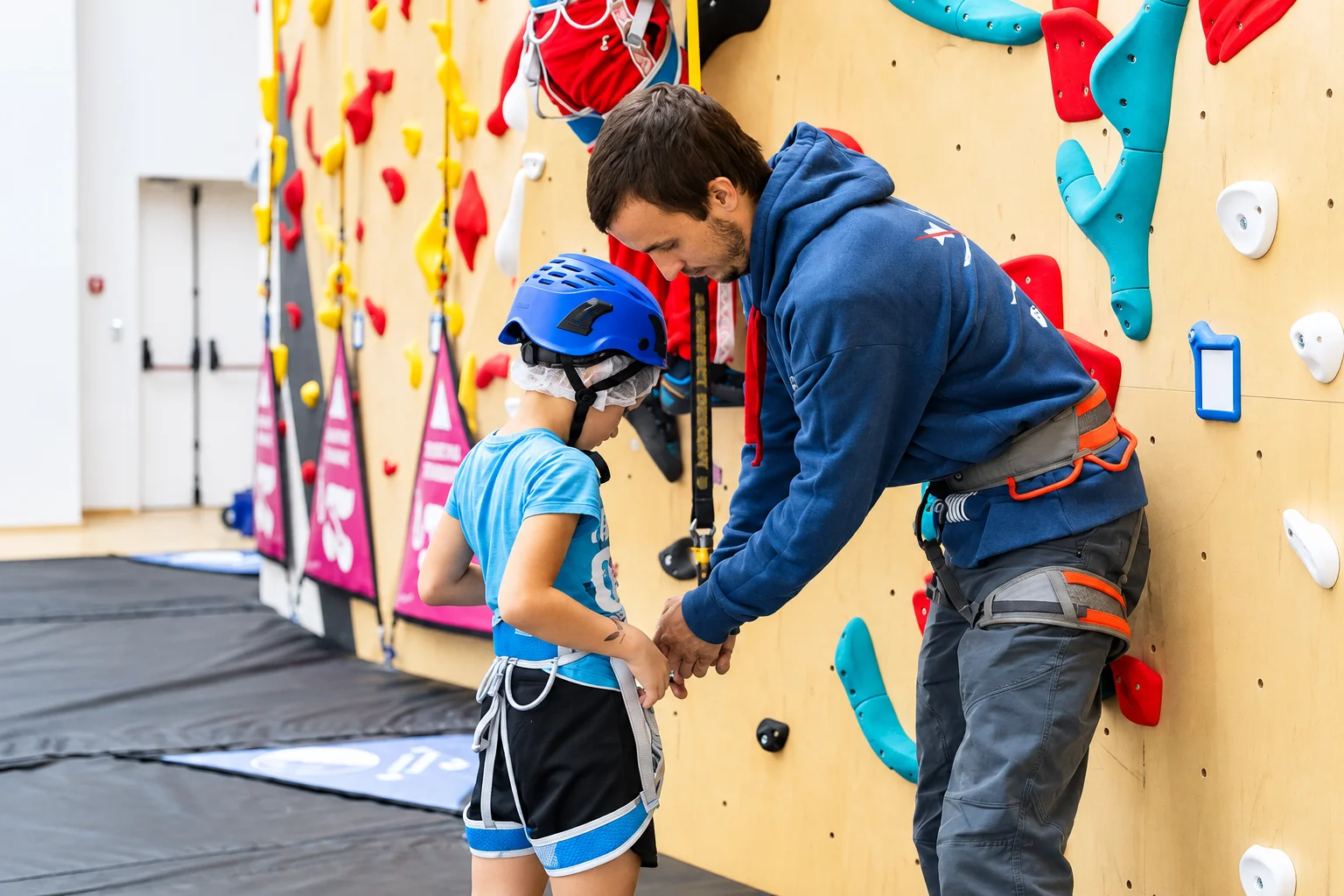
Follow the manufacturer’s fitting procedure and seek assistance from an appropriately qualified instructor or activity provider where needed.
The checks below identify important fitting considerations. They are not a substitute for the manufacturer’s instructions or the facility’s required safety procedures.
Check the Waist
For a junior sit harness, confirm that the waist belt sits where the manufacturer specifies.
Once adjusted, check that:
- The belt remains correctly positioned
- It doesn’t slide easily down over the hips
- It doesn’t fold or twist excessively
- The buckle is correctly secured
- All adjustments remain within the approved range
If the belt moves substantially out of position, reassess the size or harness design rather than attempting to compensate through excessive tightening.
Check the Leg Loops
Leg loops should remain correctly positioned without excessive looseness or painful restriction.
Check for secure adjustment, appropriate strap alignment and freedom of movement as required by the manufacturer.
Some junior harnesses have fixed leg loops, while others provide adjustable designs.
Neither arrangement is automatically better. The important question is whether the particular harness fits the child securely and can be used as intended.
Check the Harness While the Child Moves
A harness may appear to fit while a child is standing still but behave differently during movement.
Follow any movement, loading or suspension checks specified by the manufacturer or climbing facility.
Reassess the harness if:
- It shifts excessively
- The waist belt moves out of position
- Straps twist or interfere with correct positioning
- Buckles cannot be secured as instructed
- The child cannot move normally
- Adjustment points reach or exceed their permitted limits
If the fit remains uncertain, have it assessed by an appropriately qualified climbing instructor, activity provider or experienced specialist before the harness is used.
Skip the Universal Two-Finger Rule
Generic finger-width rules are sometimes used to describe climbing-harness fit.
They shouldn’t replace the manufacturer’s fitting procedure.
Harnesses vary in waist geometry, buckle design, leg-loop construction and adjustment methods. One universal measurement cannot account for these differences.
Use the fitting instructions provided for the exact harness rather than relying on a shortcut that may not apply to its design.
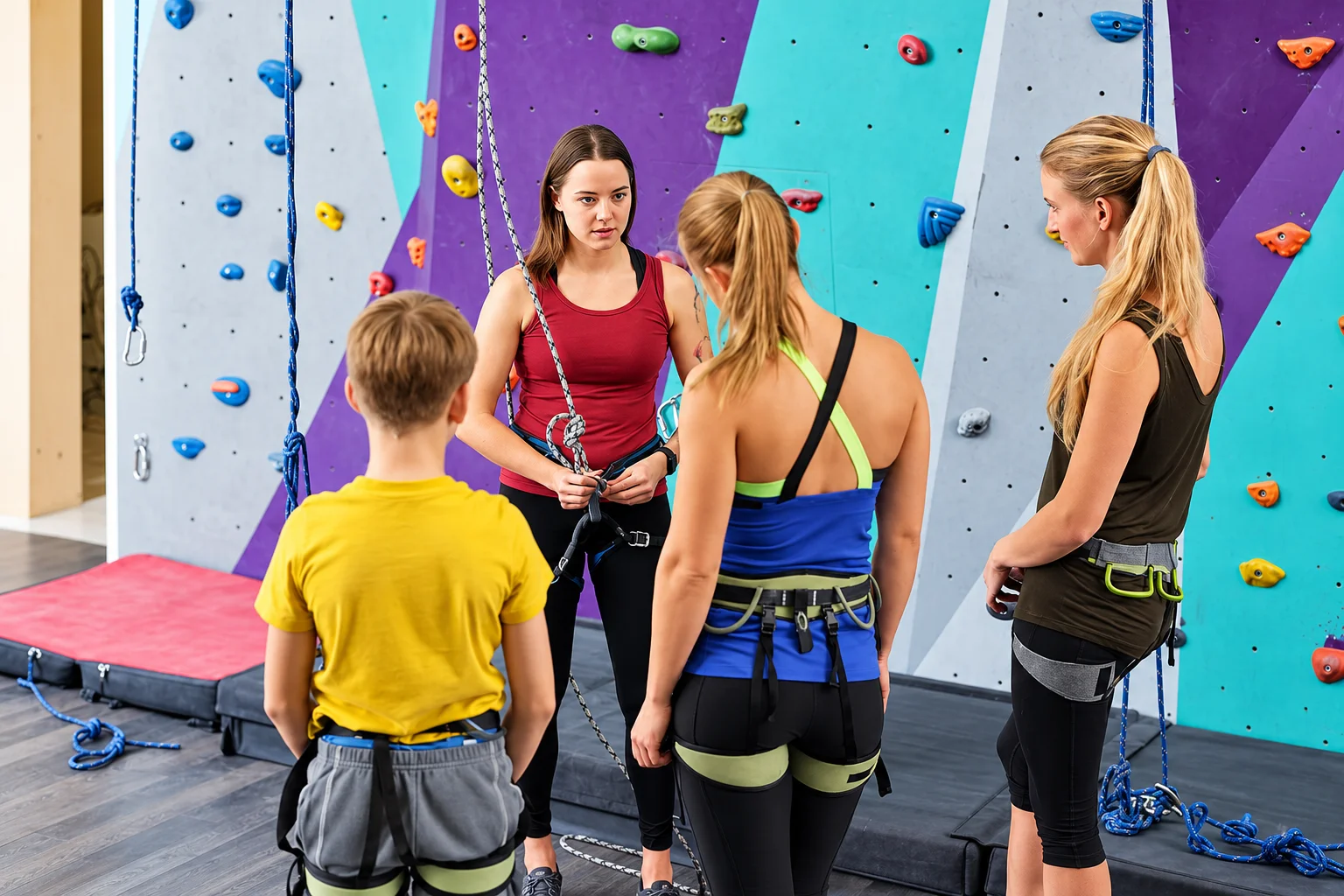
Schools and Outdoor Programs Are Fitting a Group, Not an Average Child
Choosing a harness for one child is an individual fitting decision.
Buying harnesses for a school, climbing program or outdoor education group involves a broader challenge.
Children in the same class or age group can vary considerably in height, waist size, hip shape and overall proportions.
According to WorkSafe Victoria, the regulator responded to seven serious incidents involving falls from artificial climbing structures between March 2022 and July 2025, including incidents involving children. WorkSafe’s findings emphasise the need for trained staff to check harness fit and connections before each climb, alongside appropriate supervision. These safety considerations are particularly relevant when climbing facilities and outdoor programs manage equipment for children of different sizes and abilities.
One harness may fit some participants correctly while being unsuitable for others.
Program buyers should consider:
- Participant ages, sizes and body proportions
- The activities being delivered
- Manufacturer sizing and intended-use guidance
- Harness adjustment ranges
- Staff fitting and supervision procedures
- Inspection requirements
- Equipment retirement criteria
- Cleaning and storage arrangements
- Known equipment history
The aim is to select equipment that can be fitted, checked and managed consistently for the actual participant group.
A documented fitting, inspection and supervision process is important. Harness design alone doesn’t replace those procedures.
Broad Adjustment Does Not Mean Universal Fit
A wide adjustment range can be useful when equipment is shared among participants.
However, it doesn’t guarantee that every child within the listed range will achieve an equally suitable fit.
This is particularly relevant for programs involving younger children and older teenagers.
Two participants may fall within the same sizing range but have very different body proportions.
Organisations should assess the fit across their actual participant group rather than assuming one harness model will accommodate everyone.
In some cases, maintaining more than one harness size or category may be necessary.
Known Equipment History Counts
Price matters, particularly when parents or organisations need to purchase multiple harnesses.
Equipment history also matters.
A used harness may appear acceptable while leaving unanswered questions about:
- Age
- Storage conditions
- Chemical exposure
- Loading history
- Previous inspections
- Manufacturer retirement limits
If the equipment’s history cannot be established, a lower purchase price may come with uncertainty about its suitability for continued use.
Routine inspection should remain part of harness ownership.
Follow the manufacturer’s inspection and retirement guidance. Look for damage or changes such as worn stitching, damaged buckles, signs of heat or chemical exposure, discolouration, or anything else that may affect correct adjustment and use.
For safety equipment, a known history and proper inspection process are important considerations.
Five Checks Before You Buy a Children’s Climbing Harness
Before choosing a harness, work through these five questions.
1. Does It Fit the Child’s Current Body?
The harness must suit the child who will wear it now.
Future growth shouldn’t take priority over secure fitting within the manufacturer’s approved range.
2. Is It Intended for the Activity?
Check that the manufacturer approves the harness for the climbing or supervised activity involved.
Don’t assume that all child-sized harnesses suit every climbing application.
3. If It’s a Sit Harness, Does the Waist Stay Securely Positioned?
The waist belt needs to remain in its intended position during the manufacturer’s required fitting checks.
If reliable waist retention cannot be achieved, reassess the size or harness type.
4. Can Every Adjustment Point Be Secured Correctly?
Buckles, straps and adjustment points must operate within the manufacturer’s approved limits.
If a harness cannot be adjusted correctly, it shouldn’t be treated as suitable simply because it can be fastened.
5. Has the Fit Been Checked on the Actual Child?
Size charts and age labels help narrow the options, but they don’t replace assessment of the harness on the wearer where fitting is possible.
Follow the manufacturer’s procedure and obtain qualified fitting assistance whenever needed.
Fit the Child First, Then Choose From the Harnesses That Remain
A children’s climbing harness should suit the child’s current proportions and intended activity.
Don’t buy a larger harness simply to allow for future growth, or assume that a small adult harness will work because its straps can be tightened.
Start by establishing whether a junior sit harness or full body design is appropriate. Then check the manufacturer’s requirements and assess the fit.
Only compare brands, features and prices once you’ve identified harnesses that are genuinely suitable.
You can browse our Climbing Harness Range to explore current harness categories and products.
If you’re deciding between a junior sit harness and a full body design, our Harness Selection Guide provides a broader comparison of the main harness types.
If you’re buying for your child, a school or an outdoor program and the correct harness type isn’t clear, contact Offtrack for harness advice.
Tell us who will wear the harness and what activity they’ll be doing. That provides a useful starting point for narrowing the appropriate category before comparing individual models.
Frequently Asked Questions About Children’s Climbing Harnesses
Can a Child Wear a Small Adult Climbing Harness?
Only if the manufacturer approves the harness for that child’s size and intended activity, and it fits securely.
The ability to tighten an adult harness around a child doesn’t establish that it is suitable.
When Should I Consider a Full Body Kids Harness?
A full body design may be appropriate when the child’s proportions make secure sit-harness retention difficult, when the manufacturer recommends one or when the activity provider specifies that type.
Correct fit and intended use must still be confirmed.
Should I Buy a Larger Harness So My Child Can Grow Into It?
No. A climbing harness should fit the child’s current size and proportions.
Future growth shouldn’t take priority over secure fit and the manufacturer’s approved adjustment limits.
How Tight Should a Children’s Climbing Harness Be?
It should remain securely positioned and adjusted within the manufacturer’s approved range without causing painful restriction.
Follow the fitting instructions for the particular harness rather than relying on generic measurements.
Is a Full Body Harness Always Safer for a Younger Child?
Not automatically.
A full body design may provide a more suitable fit for some children, but the choice depends on body proportions, intended use and manufacturer guidance.
What Children’s Climbing Harness Brands Should I Consider?
Start with harness type, size and intended activity rather than brand.
Once the appropriate category is clear, compare available models that meet the manufacturer’s requirements and fit the child correctly.
What Should a School Check Before Ordering Multiple Kids Harnesses?
Consider the participant group’s age, size and body proportions, alongside:
- The activities being delivered
- Manufacturer sizing and intended-use instructions
- Adjustment ranges
- Staff fitting and supervision procedures
- Inspection and retirement requirements
- Cleaning and storage
- Equipment history
- Whether multiple sizes or harness categories are required
The goal is an equipment pool that can be fitted and managed consistently for the children using it.