Full body harness vs sit harness is a decision that should start with the person wearing the equipment and the activity they will be doing. Neither harness type is automatically safer for every user.
A suitable climbing harness must fit securely, remain correctly positioned and be approved by the manufacturer for its intended use.
For many adults and older youth climbers, a standard sit harness is a sensible starting point. Some younger children, people with different body proportions or participants in particular supervised activities may need a child-specific or full body climbing harness.
The decision becomes more complex for schools, outdoor education providers and ropes-course operators. They need equipment that suits a range of participants and can be fitted, checked and managed consistently across repeated sessions.
There is also an important distinction between recreational and industrial equipment. A full body climbing harness, an adventure park harness and an industrial fall-arrest harness may look similar, but their attachment points, certifications and intended applications can be very different.
Before comparing prices or individual products, establish three things:
- Who will wear the harness?
- What activity and equipment system will it be used with?
- What does the manufacturer specify about its intended use and fit?
These questions provide a more reliable starting point than choosing by appearance, padding or price.
Do Not Start With Price, Padding or Appearance
A harness can have comfortable padding, convenient adjustment systems and an attractive price without being suitable for the person or activity.
Those features matter only after the correct equipment category has been established.
A discounted harness is still the wrong choice if it cannot be adjusted securely, falls outside the manufacturer’s approved range or is not intended for the activity.
The same applies to gear loops, padding and other visible features. They may improve comfort or convenience, but they cannot compensate for unsuitable sizing or incorrect use.
Start With Who Will Wear It
Consider the user’s current size, age and body proportions.
Then check the manufacturer’s sizing and weight guidance, adjustment range and fitting instructions for the specific harness.
Age alone is not enough to determine suitability.
Two children of the same age may have very different proportions. Adults and older youth climbers also vary considerably in waist shape, hip definition and leg dimensions.
Labels such as children’s harness, sit harness and full body harness help narrow the options, but they do not replace checking the actual fit.
The harness needs to remain correctly positioned on the wearer, with all adjustment points secured according to the manufacturer’s instructions.
Then Define the Activity
A harness selected for recreational climbing may have a different role from equipment used in an outdoor education program, ropes course, adventure park or industrial work-at-height system.
Those differences can affect attachment points, intended loading, certifications and fitting requirements.
For individual climbers, the task is to match the harness to their activity and body proportions.
For organisations, the decision also involves the equipment system, participant population and the procedures staff use to fit and inspect harnesses.
The product must be suitable for both the wearer and its intended application.
Sit Harness, Full Body Harness or Children’s Harness?
These harness categories provide different forms of support and address different fitting requirements.
The following comparison is a starting point rather than a universal selection rule.
| Harness type | Often considered for | Main suitability question |
| Standard sit harness | Many adult and older youth recreational climbers | Can the waist belt and leg loops remain securely positioned within the approved adjustment range? |
| Full body climbing harness | Some children, users with particular body proportions and activities requiring additional torso support | Is the harness intended for the activity, and does it fit the individual correctly? |
| Child-specific climbing harness | Younger climbers who need sizing or construction designed around their proportions | Does the harness fit the child securely now and meet the manufacturer’s requirements? |
A child-specific harness may use either a sit-style or full body design, depending on the product.
The categories therefore should not be treated as three completely separate or interchangeable solutions.
Two harnesses within the same category can also fit very differently. Always check the exact model, its intended use and the manufacturer’s instructions before deciding.
A Sit Harness Makes Sense When It Stays Securely Positioned
A standard sit harness supports the waist and upper legs.
For many adult recreational climbers and older youth who fall within the manufacturer’s approved sizing range, it provides an appropriate starting point.
The important consideration is whether the particular harness remains correctly positioned once adjusted.
The waist belt should sit where the manufacturer specifies and remain secure rather than sliding easily down over the hips. Leg loops should fit without excessive looseness or painful restriction, and buckles must be secured exactly as designed.
Secure Waist Retention Comes Before Familiarity
Sit harnesses are familiar to many climbers, but familiarity does not establish that a particular model suits every wearer.
A harness may appear to fit while the user is standing still but shift excessively during movement.
Check whether the wearer can move comfortably without the waist belt or leg loops moving out of position.
The harness must also remain within its approved adjustment range. If achieving a secure fit requires using the straps beyond the manufacturer’s limits, reassess the size or model.
Avoid relying on universal fitting shortcuts, such as a fixed finger-width rule. Different harness designs have different requirements.
Follow the manufacturer’s fitting procedure and seek qualified assistance whenever suitability is uncertain.
Consider a Full Body Harness When the User Needs a Different Type of Support
A full body climbing harness extends support beyond the waist and legs to include the torso.
This can make it more appropriate for certain users and activities.
Some younger children have less defined hips and a higher centre of gravity than adults. Depending on the harness design and intended activity, torso support may help provide a more suitable fit and maintain the harness’s intended position.
A full body design may be worth considering when:
- A sit harness cannot be adjusted securely for the individual
- The user’s proportions make reliable waist retention uncertain
- The manufacturer recommends a full body design
- The supervised activity provider specifies that type of harness
These are reasons to assess a full body harness, not automatic indications that every model will be suitable.
The individual product must still meet the user’s sizing requirements and be intended for the activity.
A Full Body Climbing Harness Is Not Automatically Safer for Everyone
More webbing and additional torso support do not automatically make a harness safer.
A full body design still needs correct adjustment, secure buckles and an appropriate fit.
Its attachment points and intended application must also match the activity.
This distinction is especially important because the term full body harness is used across recreational climbing, adventure activities and industrial safety equipment.
The correct choice depends on the specific harness rather than the category name alone.
Children’s Harnesses Need to Fit the Child Now
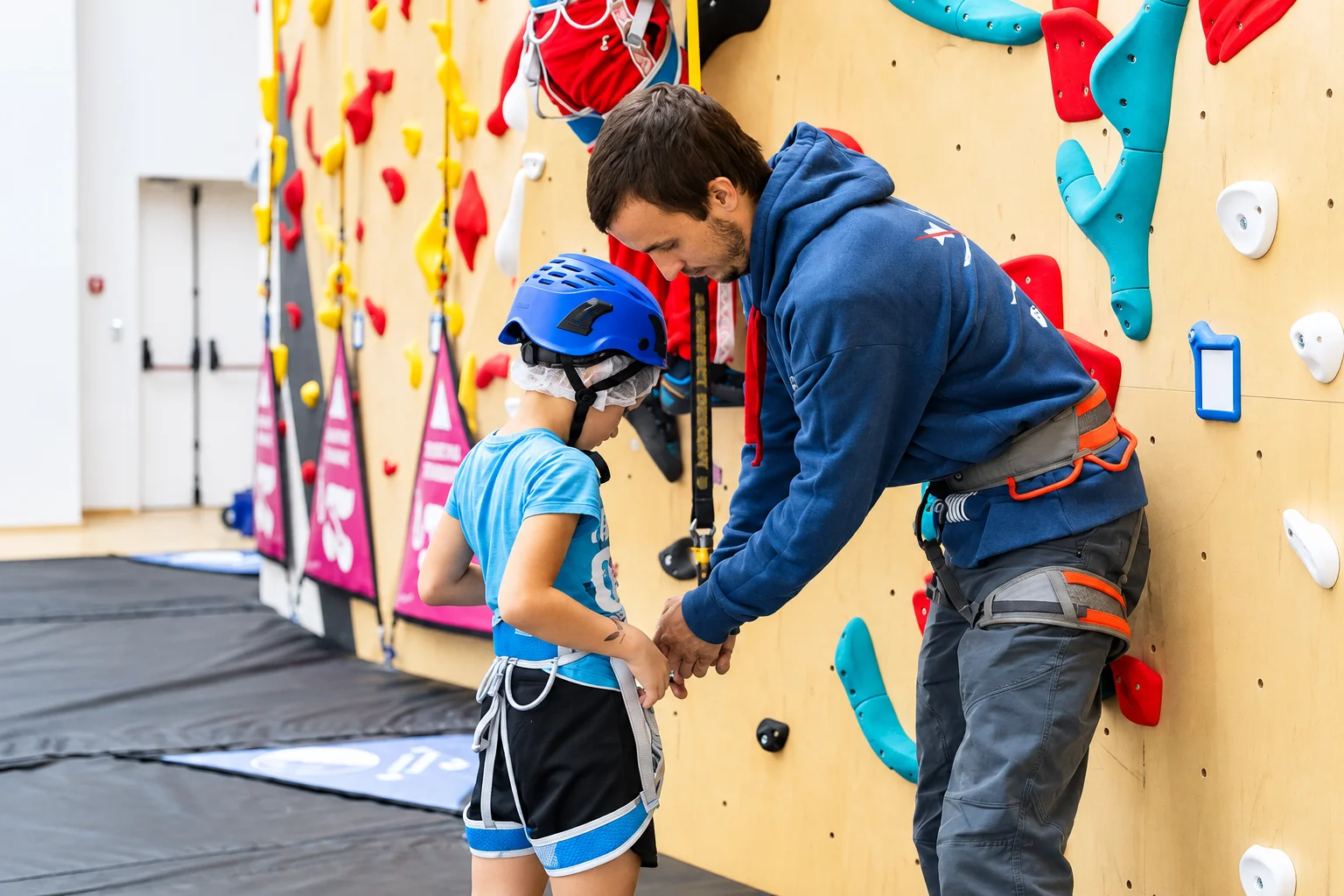
A climbing harness should fit the child who will use it today.
Buying an oversized harness so a child can grow into it can undermine the secure adjustment the equipment is designed to provide.
Check the manufacturer’s sizing, weight guidance, intended user range and fitting instructions before choosing a model.
Do not assume that a small adult harness is suitable simply because its straps can be tightened around a child.
The manufacturer must approve the harness for the user’s size and intended activity, and the fit must be secure.
Growth Room Should Not Come at the Cost of Secure Adjustment
Parents, schools and activity providers understandably want equipment to remain useful for as long as practical.
However, maximum adjustability should not take priority over correct fit.
If a child is near the limit of a harness’s approved range, assess the fit carefully. The harness should remain secure without relying on adjustments beyond the manufacturer’s stated limits.
For schools and outdoor programs, this may mean maintaining several harness sizes or types rather than expecting one model to suit every participant.
Equipment selection should reflect the children using it, not just the broadest available size chart.
An Adventure Park Harness and a Recreational Climbing Harness May Have Different Jobs
The term full body harness can describe equipment used in very different systems.
A recreational full body climbing harness may be designed for climbing or particular supervised activities.
An industrial full body harness can incorporate dedicated fall-arrest, work-positioning or rope-access attachment points, along with certifications specific to those applications.
According to Safe Work Australia’s Key Work Health and Safety Statistics Australia 2026, 28 Australian workers died following falls from height in 2025, representing 13% of workplace traumatic injury fatalities. These figures highlight the consequences of working at height and the need for appropriate fall-risk controls, including correctly selected and compatible fall-protection equipment where required.
These products should not be considered interchangeable because they look similar.
Offtrack’s Vertic Triple Lock provides an example of a different equipment category. It is described as a fall-arrest, work-positioning and seat harness, with certifications including EN 361, EN 358, EN 813 and ANSI/ASSE Z359.11-2014.
That intended use is different from an ordinary recreational climbing harness.
Do Not Assume Every Full Body Harness Is Interchangeable
Appearance alone cannot establish whether a harness is compatible with an activity or safety system.
An industrial rope-access harness should not be selected for recreational climbing simply because it includes shoulder straps.
Likewise, a recreational climbing harness should not be assumed suitable for industrial fall-arrest work.
Before selecting equipment, confirm:
- The manufacturer’s stated intended use
- The purpose of each attachment point
- The applicable certifications and product requirements
- Compatibility with the system in which the harness will be used
For schools, adventure parks and other organisational buyers, these checks should happen before comparing price, adjustment features or convenience.
Fit Is a Safety Check, Not a Comfort Preference
Comfort matters, but correct harness fit does more than prevent rubbing or discomfort.
A harness must remain positioned and adjusted as intended while the wearer moves and during any loading or suspension checks specified by the manufacturer or facility.
The following checks help identify potential fitting problems. They do not replace the manufacturer’s instructions or an activity provider’s formal procedures.
Check the Waist
For a sit harness, position the waist belt as the manufacturer directs, commonly above the hips.
Once adjusted, it should remain secure rather than sliding easily out of position during movement.
Fasten and secure the buckle exactly as designed.
If the waist belt cannot remain correctly positioned within the approved adjustment range, reassess the harness.
Check the Legs
Leg loops should sit securely without excessive looseness or painful restriction.
Both fixed and adjustable leg-loop designs can be suitable when correctly sized and used as intended.
The important consideration is whether the harness fits the individual and remains within the manufacturer’s stated range.
Check the Whole Harness While the User Moves
A harness that looks suitable while someone stands still may behave differently when they bend, move or change position.
Follow the manufacturer’s fitting checks and any loading or suspension procedures required by the facility.
Look for excessive movement, twisting, loosening or adjustment points approaching their limits.
Where fit or suitability remains uncertain, have the decision confirmed by an appropriately qualified instructor, activity provider or specialist.
Do not proceed on the assumption that a harness is suitable simply because it can be fastened.
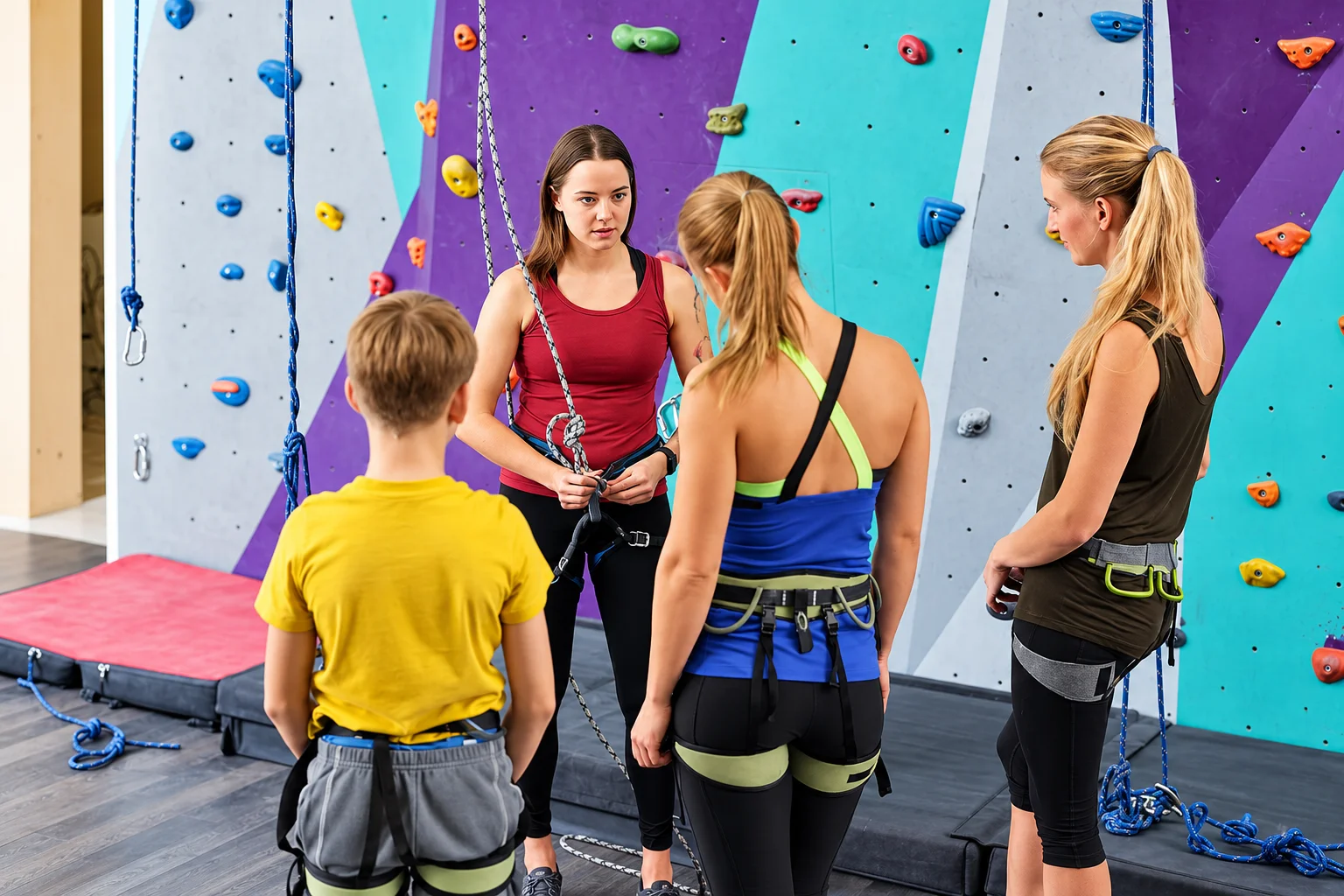
Schools and Ropes-Course Programs Are Buying for a Population, Not One Person
The full body harness versus sit harness decision becomes more complex when equipment is purchased for a school, climbing centre, outdoor education program or ropes-course operation.
An individual buyer needs a harness that fits one person and suits their intended activity.
An organisation needs an equipment pool suitable for a changing group of participants.
A harness that fits one participant correctly may not work for the next person using the same equipment.
That makes participant diversity, staff procedures and equipment management central to the buying decision.
Organisations should consider:
- Participant ages, sizes and body proportions
- The activities and equipment systems involved
- Manufacturer sizing and intended-use requirements
- Adjustment range and fitting procedures
- Staff training and supervision
- Inspection and retirement requirements
- Cleaning, storage and equipment history
The aim is not simply to purchase the harness with the widest advertised adjustment range.
It is to select equipment that staff can fit, inspect and manage consistently for the people who will actually use it.
Broad Adjustment Does Not Guarantee Broad Suitability
A wide adjustment range can be useful for group equipment, but it does not guarantee a secure fit across every body shape within that range.
Two participants may fall within the same stated sizing limits while the harness sits differently on each of them.
This is particularly relevant to mixed school groups and outdoor activity programs.
Equipment selection should account for real participant fit, not only the numbers on the manufacturer’s chart.
Where one model does not suit the full group, carrying more than one harness size or category may provide a better solution.
Price Comes After Harness Type, Fit and Intended Use
Price becomes useful once the appropriate harness options have been identified.
At that stage, buyers can compare adjustment systems, durability, comfort, convenience and other product features.
A discount should never justify choosing equipment that does not fit securely or is unsuitable for the intended activity.
For group operators, equipment history is another consideration.
Inspection status, age, storage conditions and manufacturer retirement guidance should be known and managed appropriately.
The buying sequence should remain straightforward: establish the correct category, confirm intended use and fit, then compare features and price among suitable products.
Five Checks Before Buying Harnesses for a Group
Choosing harnesses for a school, ropes course or outdoor education program requires more than finding a model with a wide adjustment range.
Work through these five questions before comparing products.
- Who will wear the harnesses? Consider the actual range of participant ages, sizes and body proportions. One model may not suit the entire group.
- What activities will participants complete? Confirm that each harness is designed and approved for the particular climbing, ropes-course or supervised activity system.
- What does the manufacturer specify? Check sizing, weight guidance, intended use, attachment points, adjustment limits and fitting instructions for the exact product.
- Can staff fit and check the equipment consistently? Consider buckle visibility, strap management, adjustment procedures and the training required to confirm correct fitting across repeated sessions.
- How will the equipment be managed? Establish procedures for inspection, cleaning, storage, retirement, training and supervision in accordance with manufacturer and facility requirements.
These checks provide a stronger basis for purchasing than choosing solely by price or the widest advertised adjustment range.
The goal is an equipment pool that suits the participants and can be managed reliably throughout the program.
The Right Harness Category Is the One That Fits the User and the System
A full body harness is not simply an upgraded sit harness, and a sit harness is not automatically the right choice for every climber.
For many adults and older youth climbers, a standard sit harness is a logical starting point when it fits correctly and is intended for the activity.
Some children and users with different body proportions may require a child-specific or full body design.
Schools, climbing centres and outdoor activity providers also need to consider the participant population, equipment system and staff fitting procedures.
Industrial fall-arrest and rope-access harnesses remain a separate selection decision based on their intended application and manufacturer requirements.
The correct order is to establish the user and activity, check the manufacturer’s instructions, verify fit and then compare appropriate products.
If a full body design is relevant to your requirements, browse Offtrack’s Full Body Harnesses category.
For broader advice on recreational harness selection, read our Harness Selection Guide.
If you’re purchasing equipment for a school, ropes course, outdoor education program or mixed group, contact Offtrack.
Tell us who will use the equipment, the activity you’re delivering and the participant range you’re planning for. That provides a useful starting point for narrowing the appropriate harness category before comparing individual products.
Frequently Asked Questions About Full Body and Sit Harnesses
Is a Full Body Harness Safer Than a Sit Harness?
Not automatically.
A full body harness may provide a more suitable fit or type of support for certain users and activities, but it still needs to be correctly adjusted and approved for its intended use.
The safer suitable choice depends on the individual, the activity and the manufacturer’s requirements.
When Should a Child Use a Full Body Climbing Harness?
A full body design may be considered when a child’s proportions make secure sit-harness retention difficult, when the manufacturer recommends it or when the activity provider requires that type of harness.
Age alone should not determine the decision.
Can a Child Use a Small Adult Climbing Harness?
Only if the manufacturer approves the harness for that user’s size and intended activity, and it fits securely.
Being able to tighten the straps around a child does not establish suitability.
Is an Adventure Park Harness the Same as a Rock-Climbing Harness?
Not necessarily.
Adventure parks and supervised activity systems may use harnesses designed for particular attachment arrangements, equipment systems and operating procedures.
Check the exact product and activity requirements rather than assuming the harness categories are interchangeable.
Is a Full Body Climbing Harness the Same as an Industrial Fall-Arrest Harness?
No assumption should be made that they are interchangeable.
Industrial harnesses may include dedicated attachment points and certifications for fall arrest, work positioning or rope access.
For example, the Vertic Triple Lock is described as a fall-arrest, work-positioning and seat harness rather than an ordinary recreational climbing harness.
How Tight Should a Climbing Harness Be?
A harness should remain secure and correctly positioned without causing painful restriction.
It must be adjusted within the manufacturer’s approved range, using the fitting procedure specified for that product.
Generic fitting rules should not replace those instructions.
What Should Schools and Ropes-Course Operators Consider When Buying Harnesses?
Start with the participants and the activities being delivered.
Consider sizing, body proportions, manufacturer approval, adjustment systems, staff fitting procedures, inspection, storage, retirement and training.
A mixed group may require more than one harness model or size to achieve suitable fit across the participant population.