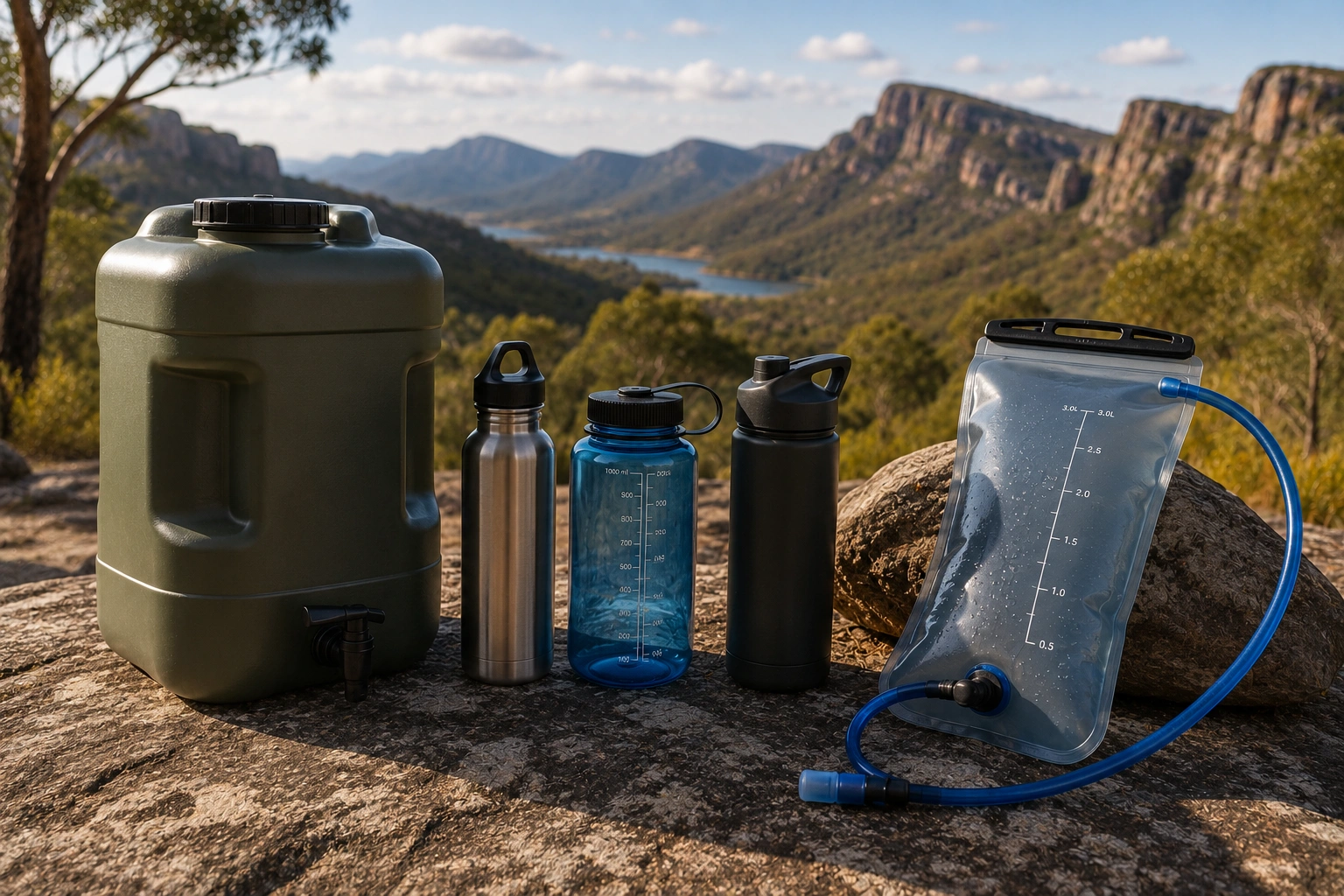
Choosing the right water container is less about capacity and more about how you will use it.
A water drum can work well at a campsite but becomes impractical on a hike. A hydration bladder makes drinking easier while walking but is poorly suited to shared camp storage. Bottles remain simple and dependable, although they may not provide enough capacity for a group.
The best setup starts with one question: will the water stay at camp, move with you or do both?
Water Drums, Bottles and Bladders at a Glance
| Option | Best for | Main advantages | Main limitations |
| Water drum | Campsites, group trips and 4WD travel | High capacity, shared access and easy camp organisation | Heavy and bulky when full |
| Water bottle | Day trips, personal use and general camping | Simple to fill, carry, clean and monitor | Limited capacity for larger groups |
| Hydration bladder | Hiking, cycling and active trips | Hands-free drinking and efficient pack storage | More effort to clean and refill |
| Combined setup | Trips with both camp storage and walking | Keeps bulk at camp while providing personal carry options | Requires more than one container type |
Choose Based on Where You Will Use the Water
For campsite or 4WD base setups, prioritise capacity, stability and easy dispensing. A water drum can provide a central supply for cooking, washing and refilling smaller containers.
For hikes and moving camps, comfort and access matter more. Bottles are straightforward to use and maintain, while hydration bladders allow you to drink without stopping or removing your pack.
Many trips need both. Keeping a larger water supply at camp and carrying bottles or bladders on foot is often the most practical option.
When to Choose a Water Drum
A water drum is usually the best choice when the water will remain at camp or travel in a vehicle.
Larger drums reduce the need to manage several small containers and make it easier for groups to share one central supply. They are particularly useful for:
- Camp kitchens
- Group camps
- School trips
- 4WD touring
- Remote basecamps
- Longer stays between reliable refill points
A water drum with a tap can make the setup even easier. Instead of lifting and pouring a heavy container whenever someone needs water, campers can dispense what they need for cooking, cleaning or refilling bottles.
Browse our water drums to compare suitable capacities and dispensing options.
Check the Filled Weight Before Buying
Water weighs approximately one kilogram per litre. The Australian Bushwalking Manual notes that water becomes prohibitively heavy to carry in substantial quantities, which is why most overnight hikers plan refill points rather than transporting all their water from the start.
A 20-litre drum can therefore weigh more than 20 kilograms once the container itself is included.
Consider who will need to lift it, where it will sit and how securely it can be stored in the vehicle. A larger drum is not always better if it becomes difficult to move or manage safely.
Look for Practical Design Features
Useful features may include:
- A secure, leak-resistant cap
- A tap that is easy to operate and replace
- A wide opening for cleaning
- Food-grade materials
- A shape that fits securely in your vehicle or storage area
- A handle that remains comfortable when the drum is full
When to Choose Water Bottles
Water bottles remain one of the simplest options for personal hydration.
They are easy to fill, clean and carry. They also make it straightforward to see how much water you have used and how much remains.
Bottles work particularly well for:
- Day trips
- Short walks
- General campsite use
- Personal water allocation on group trips
- Children and school groups
- Refilling from a larger camp supply
Even when a group uses a water drum at camp, individual bottles still make sense for short walks, activities and personal use around the site.
Browse our camping water bottles to compare sizes and designs.
What to Check in a Water Bottle
Consider:
- Capacity
- Opening size
- Leak resistance
- Ease of cleaning
- Durability
- Compatibility with cup holders or pack pockets
- Whether replacement lids or seals are available
A wide opening can make filling and cleaning easier, while a narrower drinking opening may be more comfortable on the move.
When to Choose a Hydration Bladder
A hydration bladder is designed for trips where you will be moving for long periods.
The bladder sits inside a compatible backpack, with a drinking tube positioned near your shoulder. This allows you to sip regularly without stopping to remove a bottle.
Hydration bladders are well suited to:
- Day hikes
- Longer walks
- Cycling
- Trail running
- Climbing
- Activities where frequent drinking matters
Browse our hydration bladders to compare capacities and pack compatibility.
Why Bladders Work Well on the Move
The main advantage is convenience. You can drink without breaking your pace, which may make it easier to hydrate regularly.
Bladders also store water close to your back, helping distribute the weight more evenly than a heavy bottle carried on one side of a pack.
Cleaning and Refilling Take More Effort
Hydration bladders usually require more maintenance than bottles.
The bladder, hose and bite valve need to be cleaned and dried properly. Some models are easier to open, refill and hang than others, so check the design before buying.
You should also consider whether you can see or estimate the remaining volume easily. It may be harder to judge how much water is left without opening your pack.
When a Combined Setup Works Best
A combined setup is often the most practical choice for campsites, 4WD trips and group travel.
Keep a larger water drum at camp, then refill individual bottles or hydration bladders before leaving the site. This keeps heavy storage where it belongs while giving each person a manageable way to carry water.
This setup is particularly useful when:
- Several people share one campsite
- The group takes walks or day trips away from camp
- Refill points are limited
- Cooking and washing require a central water supply
- Different people prefer different carrying methods
For remote travel, consider carrying more than one water container rather than relying on a single drum. Separate containers can provide useful redundancy if one leaks or becomes contaminated.
What to Check Before Buying
Capacity
Choose a capacity that reflects the number of people, trip length, expected conditions and access to reliable refill points.
Remember that drinking water may not be the only requirement. Cooking, cleaning and washing can increase the amount needed at camp.
Avoid relying on a generic daily figure without considering the trip. Hot weather, physical activity and remote conditions can significantly change water requirements.
Materials
Choose containers designed for potable water. Check the manufacturer’s product information and follow its instructions for cleaning, storage and temperature limits.
Leak Resistance
Inspect caps, seals, taps and hose connections. A small leak can become a major problem inside a backpack or vehicle.
Cleaning Access
Wide openings are usually easier to clean and dry. Hydration bladder hoses and valves may require dedicated cleaning tools.
Durability
Consider whether the container will be exposed to rough tracks, sharp equipment, repeated drops or heavy use.
Pack and Vehicle Compatibility
Check dimensions rather than capacity alone. A drum may hold the right amount but fit poorly in the vehicle. A bladder may be the correct size but incompatible with your backpack.
Quick Recommendations by Trip Type
| Trip type | Recommended setup |
| Solo day hike | Bottle or hydration bladder |
| Longer hike | Hydration bladder with a small backup bottle |
| Family campsite | Water drum with individual bottles |
| Group or school camp | Shared drums with clearly allocated personal bottles |
| 4WD touring | Secure water drums plus bottles for day use |
| Remote basecamp | More than one storage container plus personal carry options |
| Moving camp | Bottles or bladders chosen for comfort and pack access |
Pack for the Way the Trip Actually Runs
The best water container is not necessarily the largest or most specialised. It is the one that suits how your trip will operate.
Choose a water drum when capacity and shared access matter most. Choose bottles when you want a simple, durable personal option. Choose a hydration bladder when convenient drinking on the move is the priority.
For trips that combine campsite use with walking or day activities, use a larger container at camp and refill personal bottles or bladders as needed.
Browse our Hydration & Water range to compare water drums, bottles and hydration bladders by use case. For help choosing a suitable setup, contact our team for practical advice based on your group size, trip type and expected refill access.
Frequently Asked Questions
Is a water drum better than bottles for camping?
A water drum is often more practical when several people need access to a shared supply at camp. Bottles are better for personal use, short walks and individual water allocation. Many camps benefit from using both.
When is a water drum with a tap worth buying?
A tap is useful when the drum will remain in one place and people need to dispense water regularly. It can make cooking, washing and refilling smaller containers easier.
Are hydration bladders better than bottles for hiking?
Hydration bladders make it easier to drink while walking and can distribute weight efficiently inside a pack. Bottles are usually easier to fill, clean and monitor. The better choice depends on your pack, walking style and maintenance preferences.
How much water storage does a group campsite need?
Consider the number of people, trip length, weather, physical activity, cooking needs and access to safe refill points. Carrying water in more than one container can also provide useful backup capacity.