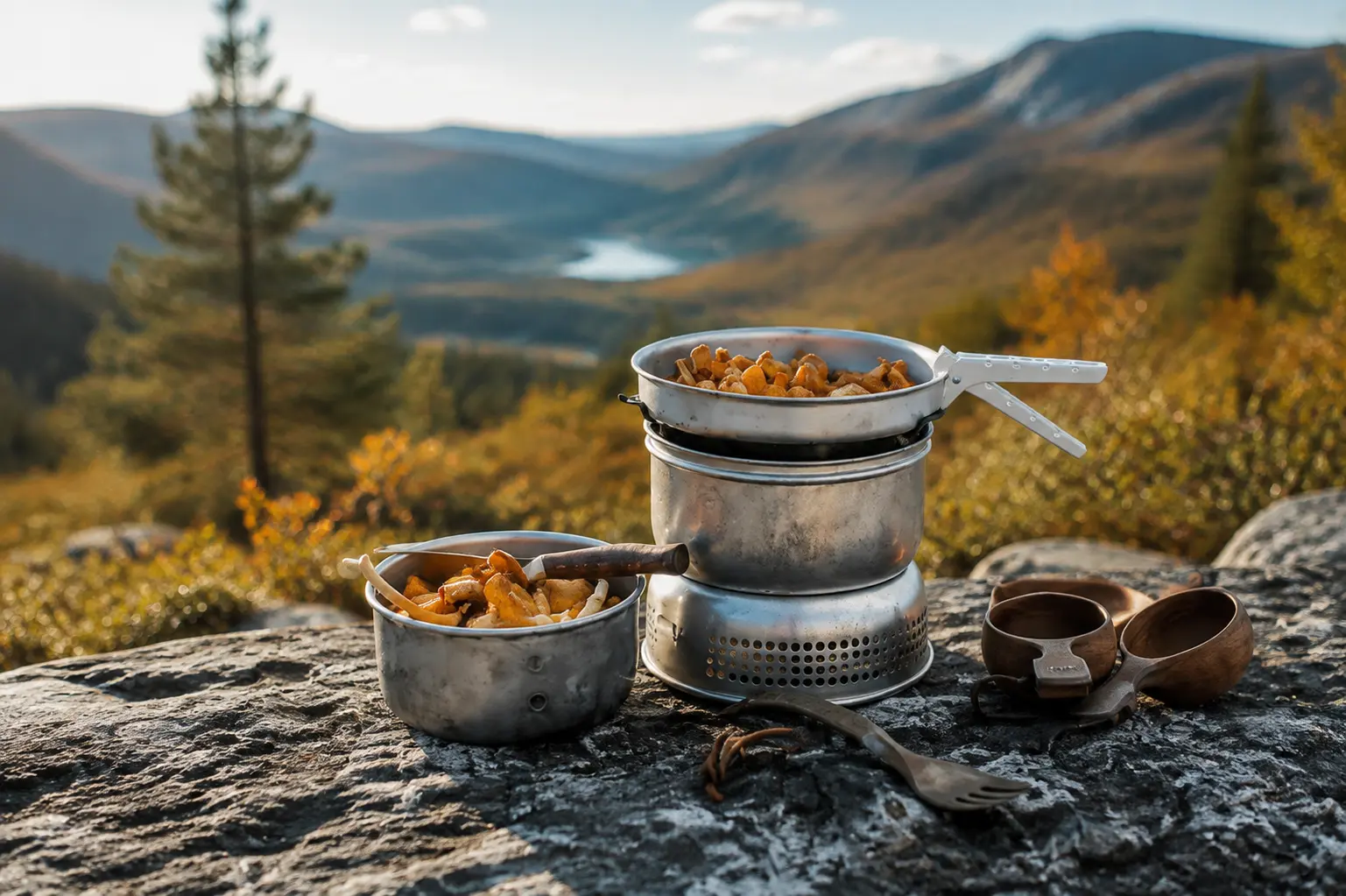
Affordable camping cookware should suit the meals you plan to cook, the number of people you are feeding and the stove you use. Anything beyond that needs to earn its place.
Price alone does not tell you whether cookware offers good value. A cheap pot that frustrates you every trip may eventually be replaced. A large cookset can look economical until half the pieces stay at home. Premium lightweight cookware can also be unnecessary if your kitchen only travels from the boot of the car to a picnic table.
At Offtrack, we prefer to work backwards from the trip.
How many people are eating? What are you cooking? Which stove will you use? How far will you carry the cookware?
Answer those questions first and it becomes much easier to spend your budget on gear you will actually use.
Buy Camping Cookware for the Trips You Actually Take
Your meal plan is one of the best budgeting tools you have.
A solo hiker boiling water for dehydrated meals, coffee and porridge can often manage with a simple setup. A family preparing pasta, sauce and breakfast for several people needs more capacity and may benefit from multiple cooking vessels.
They do not need the same cookware.
Start With Group Size and Meal Type
Start with what will actually go into the pot.
If you mainly boil water, one well-sized pot may cover hot drinks, noodles, soup, dehydrated meals and breakfast.
Cooking meals from scratch changes the requirements. A wider pot can make stirring easier. Preparing two dishes at once may justify a second vessel. A frying pan earns its place when fried meals regularly appear on the menu.
Then consider capacity.
Go too small and you may spend the evening cooking in batches. Go too large and you carry, heat and clean cookware that exceeds the job.
Aim for enough capacity to cook comfortably without buying more cookware than your usual trips require.
Which Camping Pots and Pans Can Stay at Home?
Extra cookware is easy to justify because almost every piece has a possible use. How often you use it is a better test.
A frying pan used every morning has a clear job. One packed for a single optional meal is harder to justify on a tight budget.
Kettles work the same way. Families and base campers making hot drinks throughout the day may appreciate a dedicated kettle. A walker already carrying a suitable pot can often boil water in that instead.
Removing an unnecessary piece saves purchase cost, packing space and washing up. That is a better saving than buying a cheaper version of something you did not need in the first place.
One Good Camp Cookset Can Cost Less Than Rebuilding a Poor Setup
Complete cooksets can offer good value when most of the components suit the way you normally camp.
Matched pieces often nest together, lids fit properly and handles pack neatly. That can create a compact cooking system without requiring you to choose every item separately.
The value drops when several pieces rarely leave the cupboard.
Our camping cookware range includes individual cookware and complete sets, so the better option depends on what you already own and what your camp kitchen is missing.
Camp Cookset vs Individual Camping Cookware
A camp cookset can make financial sense when you need several of its components and would otherwise buy similar pieces separately.
Individual camping pots and pans may be better if you have a simple cooking routine or already own most of what you need.
A student preparing for occasional camps may only need one dependable pot and a simple eating setup. A family replacing several mismatched pieces may get more use from a nesting cookset that handles multiple meals and packs together neatly.
Before comparing bundles, count the pieces you expect to use regularly.
A six-piece set containing only three useful pieces is effectively a three-piece set with three extras you paid for.
Spend More on the Cookware You Use Most
Not every piece deserves an equal share of your budget.
For many campers, the main cooking pot is used at breakfast, dinner and several stops in between. An occasional accessory may come out once during the trip.
Put more of your budget behind the cookware that does the most work.
Let Your Main Camping Pot Earn the Bigger Share
Capacity comes first. After that, consider stability, handle design, packed size, weight and whether the pot suits the meals you plan to prepare.
A hiking setup puts more pressure on weight and packed volume because the kitchen travels on your back.
Vehicle-based camping changes the calculation. A small difference in weight matters less, so durability and cooking convenience may be more valuable than shaving grams.
If your main pot gets used for almost every meal, improvements to that pot can benefit almost every meal too.
Frying Pans, Kettles and Extra Pots Need a Regular Job
Secondary cookware should have a clear purpose.
A second pot is useful when you regularly cook two meal components at once. A frying pan makes sense if eggs, pancakes or other fried foods are part of your normal camp menu.
Ask what happens if the piece stays home.
If leaving it behind disrupts meals you regularly cook, it probably deserves a place. If it only affects one optional dish, changing the meal may be cheaper than adding another piece of cookware.
Choose Cookware Material According to the Trip
Material affects weight, durability, cooking behaviour and price. The best value depends on which characteristics matter most for the way you camp.
Aluminium, Stainless Steel and Titanium for Different Camping Budgets
| Material | May suit | Main consideration |
| Aluminium | General camping and hiking setups | A practical balance of low weight and accessible pricing |
| Stainless steel | Campers who value toughness and repeated use | Extra weight may be easier to accept on vehicle-based trips |
| Titanium | Hikers actively reducing pack weight | The higher purchase price is easier to justify when carried weight is a priority |
Aluminium is widely used in camping cookware and can provide a practical balance between low weight and accessible pricing.
Stainless steel tends to appeal to campers who place greater emphasis on toughness and repeated use. Its extra weight may be easier to accept on vehicle-based trips or where equipment receives regular handling.
Titanium attracts hikers who are actively reducing pack weight. The purchase price is generally higher, so its benefit is easier to justify when reducing carried weight is already a priority.
A family driving directly to camp may gain little from paying substantially more to remove a modest amount of cookware weight. A multi-day hiker carrying every item for hours may place much more value on the same saving.
Spend more on a material advantage when it will make a meaningful difference to the way you travel and cook.
Match Your Camping Cookware to Your Stove Before Buying
Cookware and stoves work as a system. Your pot needs to sit securely over the burner and suit the type of cooking you expect to do.
Pot diameter, stove supports and the amount of food or water inside the vessel can all affect how comfortable the combination is to use.
A compact hiking burner may suit smaller cookware used for boiling water. Large family pots can call for a different arrangement.
Check Camping Cookware and Stove Compatibility
Start by checking how securely the cookware sits on the stove.
Then consider the cooking task.
Boiling a small amount of water for one person places relatively simple demands on a stove and pot. Preparing a large meal for a group adds more weight to the vessel and can make stability more important.
Consider the packed size of the complete kitchen as well. Compact cookware loses some of its advantage if the rest of the cooking setup does not suit the way you travel.
Build One Cooking System Instead of Collecting Separate Pieces
A simple buying sequence can reduce the chance of paying for mismatched gear.
Start with the meals and number of people. Choose the cookware capacity you need. Check that cookware against your stove. Only then compare materials, weight and additional pieces.
Our camping stoves can be considered alongside our cookware range if you are building or replacing your complete cooking setup.
Build an Affordable Cookware Kit That Lasts
A tight budget rewards restraint. The aim is to build the smallest setup that can comfortably handle your normal trips, then spend more only where the benefit will be repeated.
A Simple Affordable Camping Cookware Formula
Start with the number of people you need to feed and the meals you actually cook. That determines the capacity and number of pots or pans you need.
Remove anything that only serves an occasional or hypothetical meal. Check what remains against your stove, then decide whether paying more for lower weight, durability or compact packing will make a meaningful difference to your trips.
The budget may change between a solo hiker, a family and a student group. The principle does not: pay for the cookware you will use, not the pieces you might use.
Make Every Piece of Your Camp Kitchen Earn Its Place
Affordable camping cookware comes down to spending with a clear purpose.
Choose capacity based on the number of people you are feeding. Build your kit around meals you actually cook. Make sure the cookware works with your stove, then put more of the budget behind the pieces you will use regularly.
Some campers will get better value from a complete camp cookset. Others will be better served by one or two carefully chosen pieces.
You can browse our camping cookware range to compare individual cookware and complete sets.
If you are putting together equipment for students, a family trip or a larger group and want help narrowing down the options, contact us at Offtrack.
Seven Questions Worth Answering Before You Buy Camp Cookware
Is it cheaper to buy a camp cookset or individual camping pots and pans?
It depends on how many pieces you need. A cookset can offer better value when most of its components will be used regularly. Individual cookware can keep the total spend lower if you already own part of the setup or only need one or two pieces.
What camping cookware do I need for one or two people?
Start with the meals you plan to cook. A suitably sized pot may cover most needs when your meals involve boiling water and simple one-pot cooking. Add another vessel when your regular menu gives it a clear purpose.
Can low-cost camping cookware handle occasional camping?
Some lower-priced cookware can suit occasional recreational use. Compare the demands of your trips with the construction of the cookware. Frequent use, group programs and long hiking trips can place greater value on durability, low weight or compact packing.
Should I choose aluminium, stainless steel or titanium camping cookware?
Match the material to how you camp. Aluminium can provide a practical balance between price and weight. Stainless steel can suit situations where toughness matters more than minimising pack weight. Titanium can justify its higher cost for hikers who place greater value on reducing carried weight.
Do I need a frying pan in my camping cookware kit?
A frying pan is worth carrying when fried meals are a regular part of your camp menu. Occasional use makes it easier to leave behind, particularly for walkers trying to reduce cost, weight and packed volume.
Can I use any camping pot on any camp stove?
Compatibility should be checked rather than assumed. Consider the size of the pot, the stove supports and how stable the cookware remains once it contains food or water. Large pots deserve extra attention when paired with compact burners.
What should families and student groups prioritise?
Capacity, durability, manageable cookware systems and suitability for repeated use can carry more value for families and student groups. The menu and stove setup should guide the final choice so the equipment can reliably handle the job it is bought for.