Sleeping bags vary in packed volume. A warm sleeping bag built for cold cA hiking backpack can hold the right number of litres and still be the wrong pack for you.
A 30-litre hiking backpack holds less than a 50-litre pack. Easy enough. That number tells us very little about whether you will want to carry the pack for eight hours.
Capacity is one of the first specifications people compare when shopping for hiking packs in Australia. It gives you something concrete to work with, so that makes sense. Problems start when litres become the whole decision.
A pack still needs to fit your body. Its harness needs to cope with the weight you plan to carry. Your tent, sleeping system, clothing, food and water all have to fit inside. The length and conditions of the trip change those requirements again.
When we help someone choose a hiking backpack, we prefer to work through those factors before settling on capacity.
Fit. Load. Trip length. Equipment volume. Then litres.
Choose Your Hiking Backpack Around Your Actual Trips
Start with a real trip rather than a number on a product page.
A day walk where you are carrying lunch, water, rain protection and basic safety equipment asks very little of a pack compared with an overnight hike. Add a tent, sleeping bag, mat, stove, food and extra clothing and both the volume and weight change quickly.
Move into longer trekking and there is another layer to account for. More food, more fuel, extra clothing and potentially greater water-carrying requirements all have to go somewhere.
That is why universal pack-size rules have limited value. Saying that every day walker needs one capacity and every overnight hiker needs another sounds convenient, but real gear rarely packs that neatly.
Your Gear Pile Tells You More Than a Generic Litre Chart
Two hikers can follow the same route for the same number of days and need quite different packs.
One might carry a compact shelter, a highly compressible sleeping bag, a small air mat and minimal cooking gear. Another could use bulkier equipment chosen for durability, comfort or budget.
Both setups can do the job. They simply occupy different amounts of space.
Conditions add another variable. A colder trip might require a warmer sleeping system, insulation, gloves and more substantial weather protection. A route with limited water can add considerable weight before food and equipment are considered.
Before looking through our Packs & Bags range, make a rough list of what you expect to carry. Pay particular attention to the largest items.
Once you know what has to fit inside, capacity starts becoming useful.
Get the Backpack Fit Right Before Choosing Capacity
A larger hiking backpack does not fix a poor fit.
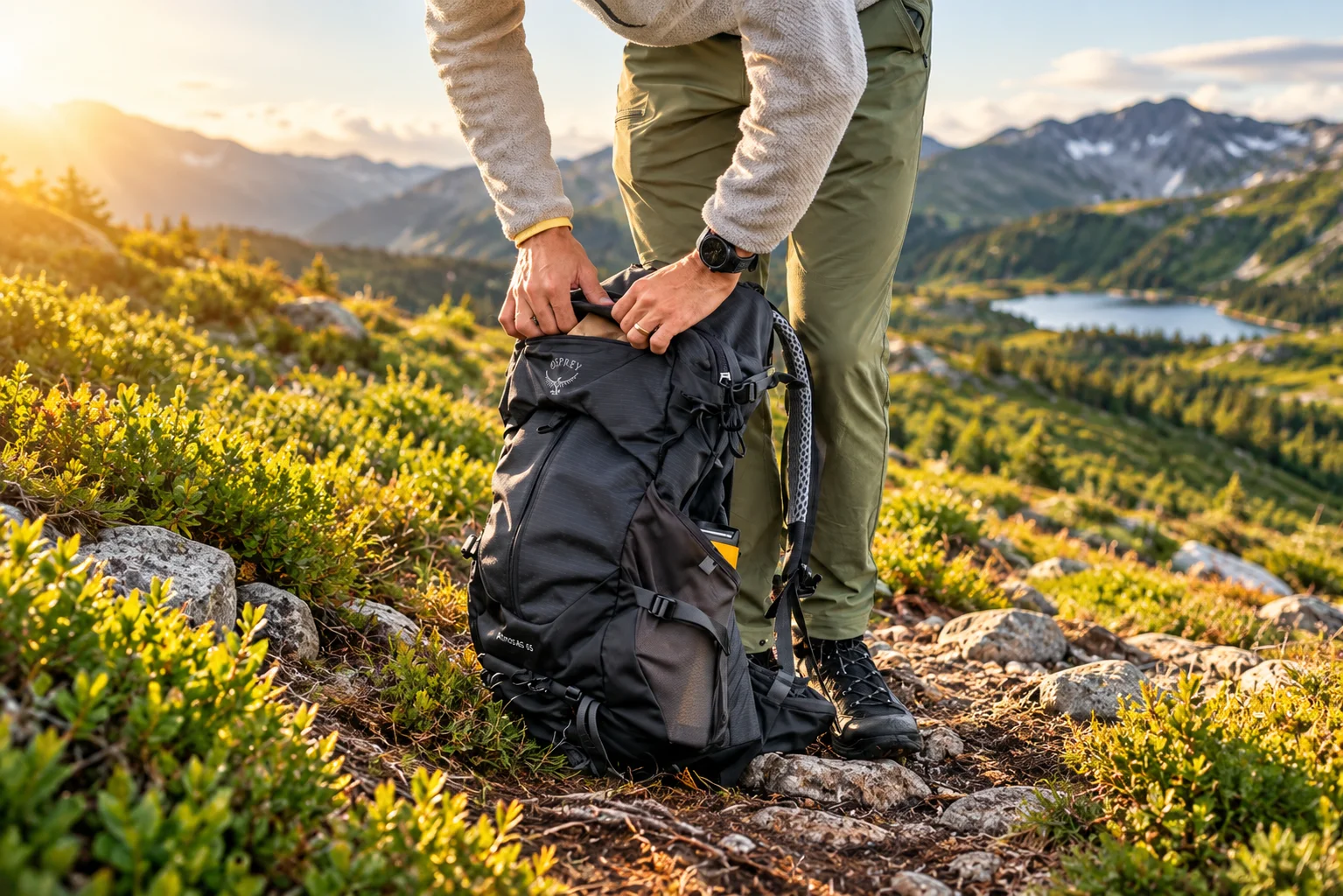
Backpack fitting involves the whole carrying system, including torso adjustment, shoulder straps, hip belt and the way the pack sits once weight is added.
A model that feels excellent on one person can feel completely different on someone with another body shape.
Torso Fit Tells Us More Than Your Height
Overall height is a poor shortcut for backpack fitting because people have different proportions.
Two hikers can stand at the same height and have different torso lengths. On packs with adjustable harnesses, getting that torso setting close to the wearer helps position the hip belt and shoulder harness where they are designed to work.
The hip belt should sit securely around the hips rather than relying on the shoulders to carry everything. The shoulder straps should follow the body cleanly and feel supportive without needing to be hauled down excessively tight.
Then add weight.
An empty pack can feel comfortable simply because there is almost nothing asking the harness to work. Adding the sort of load you expect to carry gives you a much more useful test.
Fit the pack around the person first. Capacity comes after that.
Match the Pack to the Weight You’ll Carry
Volume and weight are connected, but they are separate problems.
Bulky gear can take up plenty of room without weighing much. Dense equipment, food and water can create a heavy pack without using every litre available.
The carrying system has to deal with the weight regardless of how much empty space remains.
Heavier Loads Change What You Need From a Pack
As loads increase, differences between pack designs become easier to feel.
Harness structure, hip-belt support, padding and the shape of the back system all affect how a loaded pack sits against the body. A lightweight pack that feels ideal with day-hiking gear may become less comfortable after adding an overnight load.
That does not automatically mean heavier packs are better. Carrying more pack than you need creates its own penalty.
The aim is enough structure for the expected load without unnecessary weight or bulk.
A Framed Backpack Earns Its Place Under Heavier Loads
A framed backpack uses internal or external structural components to help the pack hold its shape and transfer weight through the carrying system.
That extra structure can be useful as loads get heavier or as the number of hours carrying them increases.
It still needs to fit.
A substantial frame with the wrong torso length or poorly positioned hip belt will not rescue a bad match. Frame design, harness fit and expected load need to work together.
For a light day-hiking setup, a heavily structured pack may offer far more support than the job calls for. For a multi-day trek carrying food, shelter and a full sleep system, that structure may feel very welcome after several hours on the track.
A Small Hiking Backpack Is Often the Better Day-Hiking Choice
Extra capacity can feel reassuring in the shop.
Then you carry it every weekend.
If most of your trips are day walks, a small hiking backpack may make far more sense than buying around a longer trip you might do once a year.
A compact pack can carry the essentials without giving you a large amount of unused space. It can also reduce the temptation to throw in extra equipment simply because there is room.
The aim is still to have enough space for the trip.
Water, food, a rain layer, insulation where conditions call for it, navigation, first aid and any activity-specific gear have to fit without becoming a packing puzzle every time you leave home.
Choosing small for the sake of being minimal is no better than choosing large for the sake of having spare room.
The volume needs to suit the equipment.
Trip Length Helps Narrow the Size, but Your Gear Finishes the Job
The number of days away tells us something useful. Longer trips generally add food, fuel and other consumables.
It cannot tell us how bulky your equipment is.
One Overnight Hiker Can Need Far More Space Than Another
Imagine two hikers heading out for the same overnight trip.
The first has a compact trekking tent, compressible sleeping bag, small air mat and lightweight cooking setup. The second carries a roomier shelter, a bulkier sleeping system and additional clothing.
Same route. Same night away. Different pack requirements.
Group arrangements change things again. One person might carry the shelter while another takes the stove and food. A solo hiker cannot divide those items between several people.
Season also changes the contents of the pack. Cold conditions can add insulation and increase sleep-system bulk. Wet conditions may increase the amount of weather protection and dry storage you want to carry.
Trip duration therefore helps narrow the options, but it cannot determine capacity on its own.
Longer Trips Make Carrying Comfort Harder to Ignore
Multi-day and expedition trips tend to increase both weight and volume.
Food accumulates. Clothing requirements can grow. Some routes require more water, specialised equipment or larger amounts of fuel.
At this point, choosing a backpack because everything technically fits inside is a low bar.
You also have to carry it.
A suitable pack should provide enough room for the equipment while giving the load a carrying system that suits both the weight and the wearer.
Your Equipment Can Affect Pack Size More Than Trip Length
Pack-volume advice becomes unreliable when it assumes everyone’s outdoor equipment takes up roughly the same amount of room.
onditions will create a different requirement from a lightweight summer bag. Sleeping mats range from compact inflatable designs to bulkier options chosen for durability or comfort.
Shelters vary too. So do cooking systems, rainwear, spare layers and food.
As a result, one person’s overnight setup may take up less room than another person’s equipment for a demanding day trip.
Look at your own gear before deciding on capacity.
Lay out the largest pieces. Add the food and water required for a typical trip. Then consider what changes in colder conditions or on a longer route.
That gives you a real packing requirement rather than an abstract number.
Before comparing packs, bring those requirements together:
| Factor | What to assess | Why it matters |
| Fit | Torso adjustment, hip belt and shoulder harness | Determines how the carrying system works with your body |
| Load | Expected weight as well as volume | Helps determine how much structure and support you need |
| Trip length | Day walks, overnight trips or longer journeys | Changes food, fuel, clothing and other requirements |
| Equipment volume | Shelter, sleep system, clothing, food and water | Shows how much room your actual gear requires |
| Capacity | Available litres once the other factors are understood | Helps narrow packs that can accommodate the complete setup |
Run These Four Checks Before Buying a Hiking Backpack
By this stage, litres are much easier to judge.
1. Does the Backpack Fit Your Body?
Check the torso adjustment where available, hip-belt position and shoulder-strap fit.
Try the pack with weight inside. You want to know how the harness works once it has a realistic job to do.
2. Can the Carrying System Handle Your Normal Load?
Think about weight as well as volume.
Water, food and equipment can add up quickly. Parks Victoria recommends carrying at least 3–4 litres of water per person for a full day of hiking, along with essentials such as food, first aid supplies, spare clothing and navigation equipment. That makes the expected load an important consideration when choosing a pack and carrying system.
If your trips regularly involve heavier loads, pay close attention to frame structure, harness design and hip-belt support.
3. Is the Capacity Suited to the Trips You Do Most Often?
Buy around your real hiking habits.
A regular day hiker has different needs from someone undertaking frequent multi-day treks. Someone moving between both may need to decide which type of trip the pack needs to serve best.
4. Does Your Actual Equipment Fit Without a Fight?
Your largest items are usually the best test.
If the sleeping system, shelter and clothing consume almost all the available space before food is added, you may need to rethink the capacity or packing setup.
Large amounts of unused room can point the other way.
After the main pack is sorted, equipment such as pack liners and other Pack Accessories & Liners can be chosen around the conditions and gear you expect to carry.
Find the Pack That Fits Your Body, Gear and Hiking Plans
Litres still belong in the decision. They simply come later.
Start with how the pack fits, how much weight it will carry, how long your usual trips last and how much room your equipment occupies.
With those answers, the capacity figure becomes useful.
That applies whether you are after a small hiking backpack for day walks, a framed backpack for heavier trekking loads or a larger pack for extended trips.
If you already have a clear idea of the equipment you carry, browse our Packs & Bags and compare the options against those requirements.
If you are caught between sizes or unsure which carrying system suits your usual load, contact Offtrack. We can work through the trip, equipment and fit with you.
Seven Pack Questions Worth Answering Before You Buy
How Many Litres Should My Hiking Backpack Be?
There is no single capacity that suits everyone taking the same type of trip.
Look at trip duration, equipment volume, food and water, expected carried weight and fit before narrowing the size. Once those details are clear, litre capacity becomes much easier to judge.
Does a Bigger Hiking Backpack Carry Heavy Loads Better?
Size alone does not determine carrying comfort.
Harness design, pack structure, hip-belt support, fit and weight distribution all affect how the pack feels under load. A larger bag can still be uncomfortable if its carrying system is poorly suited to you or the weight inside.
When Should I Consider a Framed Backpack?
A framed backpack can suit trips where the load needs more structure and support, particularly across longer distances or multi-day walks.
The expected weight and fit still matter more than the presence of a frame alone.
Can I Use a Small Hiking Backpack for an Overnight Trip?
Yes, if your shelter, sleeping equipment, clothing and cooking gear pack down small enough and the final load remains suitable for the pack.
An overnight trip does not automatically require one particular capacity because equipment volume varies between hikers.
How Can I Tell Whether a Hiking Backpack Fits Properly?
Look at where the hip belt sits, how the shoulder straps follow your body and whether the harness can be adjusted to suit your torso.
Add realistic weight before making the final judgement. A loaded fitting gives you more useful information than trying on an empty backpack.
Should I Buy a Hiking Pack Large Enough for My Longest Trip?
Start with the trips you expect to do most often.
Buying around one rare expedition may leave you carrying far more pack than you need for regular walks. If your trips vary widely, compare which size covers most of your normal use with the fewest compromises.
Should I Bring My Hiking Gear When Choosing a Backpack?
You do not need to carry your entire gear cupboard into the shop, although knowing the size and weight of your normal equipment is extremely useful.
A simple gear list can show how much space you are likely to need and whether the expected load suits the pack you are considering.