A hiking trip is often shaped by the small decisions you make before leaving.
Most hikers focus on the essentials first: boots, backpacks, clothing and safety equipment. Smaller accessories such as trekking poles and gaiters can be easier to overlook because they are not always required.
However, the right accessory can make a noticeable difference when conditions become challenging.
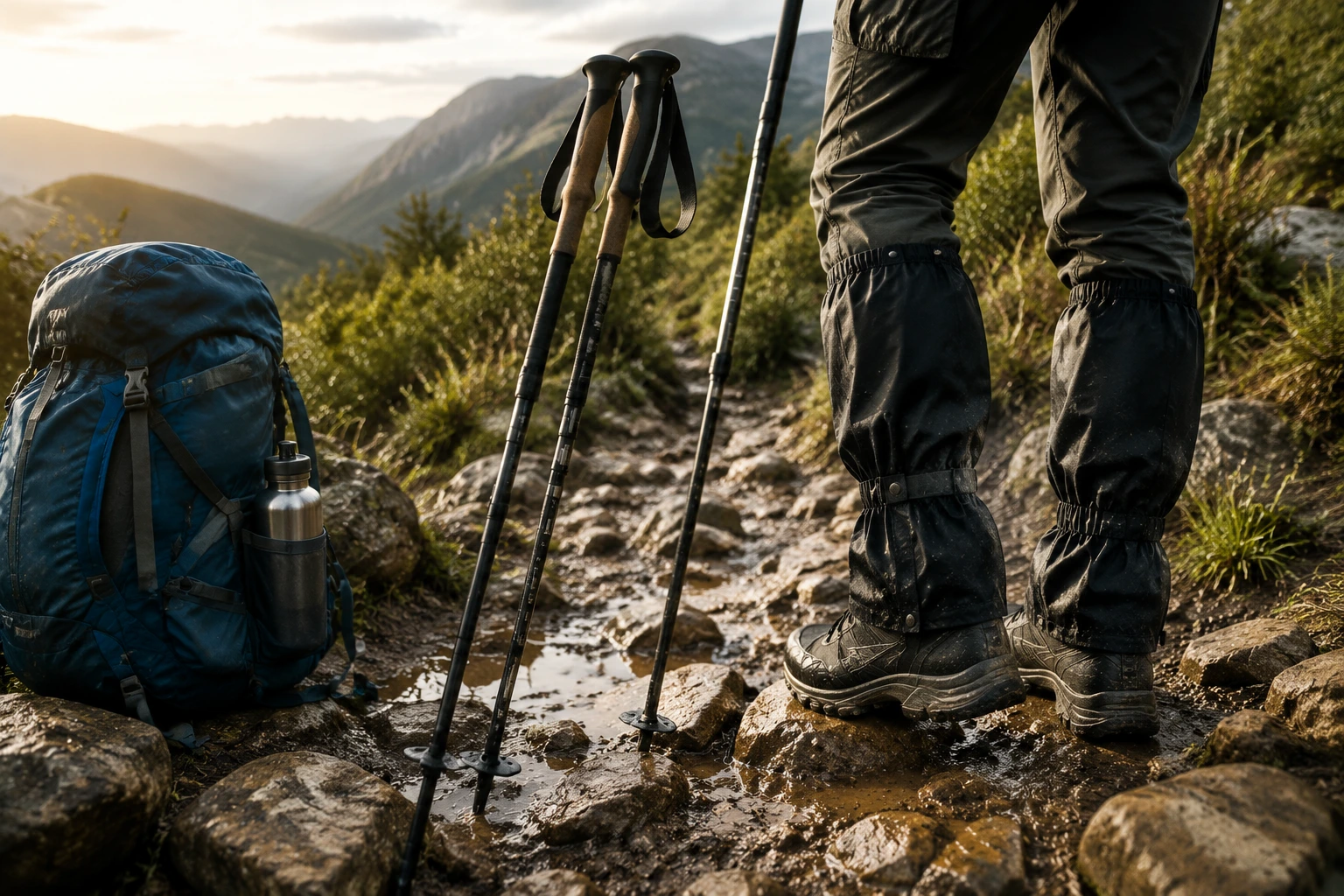
Trekking poles can provide extra stability on uneven terrain and longer walks, while gaiters can help protect your boots and lower legs from mud, moisture and debris.
Whether they are worth adding to your kit depends on where you hike, the conditions you expect and the challenges you regularly face on the trail.
The best hiking setup is not about carrying more gear. It is about choosing equipment that solves real problems and improves your time outdoors.
The right hiking accessories solve specific problems on the trail
Hiking accessories are often considered optional because they are not needed for every trip.
Hiking and bushwalking are popular outdoor activities across Australia, with AusPlay participation data from the Australian Sports Commission tracking millions of Australians taking part in sport and recreation activities each year. As more people spend time on varied trails and outdoor environments, choosing equipment that suits the conditions becomes increasingly important.
A short walk on a maintained track may not require trekking poles or gaiters. A longer hike involving uneven ground, changing weather or difficult conditions may be a different story.
Small challenges can become more noticeable over several hours outdoors:
- steep descents can place extra strain on your legs
- slippery surfaces require more balance
- muddy tracks can affect comfort
- loose debris can make its way into boots
A useful accessory helps manage those situations.
The best gear choices come from understanding your activity, your environment and the problems you want your equipment to solve.
| Hiking situation | Accessory that may help | Why it can be useful |
| Uneven or steep terrain | Trekking poles | Provides additional stability and support |
| Long walks with heavier packs | Trekking poles | Helps maintain balance and a consistent pace |
| Muddy or wet conditions | Gaiters | Helps reduce water, mud and debris entering boots |
| Tracks with loose vegetation or debris | Gaiters | Adds protection around the lower leg and boot area |
When trekking poles reduce fatigue on longer walks
Trekking poles help by allowing your upper body to contribute to balance and movement.
Instead of relying entirely on your legs when climbing, descending or crossing uneven ground, poles can provide additional contact points with the trail.
Many hikers find the biggest benefit during descents. Moving downhill over rocky or uneven sections can require extra control, and poles can provide added confidence when placing each step.
They can also help create a steady rhythm on longer walks, particularly when carrying additional weight.
Trekking poles may be useful for:
- longer day hikes
- uneven or rocky terrain
- steep tracks
- hikers carrying heavier packs
- people who prefer extra balance and support
They do not remove the challenge of a difficult trail, but they can help make demanding sections feel more manageable.
When gaiters protect more than just your boots
Gaiters are another hiking accessory that often becomes more valuable in specific conditions.
They sit over the lower leg and boot area, helping reduce exposure to mud, dirt, water and debris.
For hikers who regularly encounter wet tracks, muddy sections or rough vegetation, gaiters can improve comfort by helping keep socks and footwear cleaner during a walk.
They can also be useful when conditions make it easier for debris to enter boots.
Gaiters are not a replacement for suitable footwear, but they can complement your existing hiking setup by adding another layer of protection.
Are trekking poles worth carrying on Australian hiking tracks?
The answer depends on the type of hiking you do.
Someone walking shorter, well-maintained trails may find little need for trekking poles. Someone completing longer walks across uneven terrain may find them much more useful.
The value comes from matching the accessory to the demands of the activity.
For example:
- a beginner may appreciate extra stability while building confidence outdoors
- a longer-distance hiker may value support during extended walks
- someone hiking uneven terrain may benefit from additional balance
Like any piece of outdoor equipment, trekking poles are most useful when they solve a problem you regularly experience.
Choosing hiking accessories based on your conditions
The best hiking accessories are chosen according to your environment, not simply because other hikers use them.
A product that is valuable on one trip may not be necessary on another.
Before adding accessories to your pack, consider:
- where you normally hike
- how long your walks are
- what terrain you encounter
- what challenges affect your comfort
Wet, muddy and uneven trails
If your regular walks include wet tracks, muddy sections or areas where debris is common, gaiters may be worth considering.
They can help reduce moisture and dirt reaching your boots and socks, making longer outings more comfortable.
Trekking poles can also provide additional support when moving across slippery or uneven ground by giving you more points of contact with the surface.
Long-distance walks and heavier packs
The longer you spend walking, the more noticeable small improvements can become.
A heavier backpack changes how your body moves and can increase the demands placed on your legs during climbs and descents.
Trekking poles can help provide stability and support over extended periods, especially when the terrain becomes more challenging.
Beginner hikes and building confidence outdoors
New hikers often focus first on the essentials:
- suitable footwear
- clothing layers
- navigation
- hydration and safety equipment
Once those foundations are covered, accessories can help improve comfort and confidence.
For some hikers, feeling more stable on uneven ground can make longer and more challenging walks feel more achievable.
Small hiking accessories that solve common trail problems
The most useful hiking upgrades are often the ones that fix a problem you experience regularly.
If muddy socks are a frequent frustration, gaiters may be a practical addition.
If steep descents leave you wanting more stability, trekking poles may provide the support you need.
The goal is not to carry more equipment. The goal is to carry equipment that earns its place in your pack.
Choosing the right accessories comes down to understanding your walking style, your environment and the challenges you want to manage.
How Offtrack helps hikers choose equipment that fits the adventure
Choosing hiking equipment can be difficult when you are unsure what difference a product will make.
The right choice depends on factors such as the type of walking you do, the conditions you expect and what you want your gear to help you achieve.
Offtrack helps customers compare outdoor equipment options by focusing on practical needs and matching gear choices to individual adventures.
Whether you are preparing for longer walks or improving your current hiking setup, getting advice before buying can help you choose equipment that suits your needs.
If you are unsure whether trekking poles, gaiters or another hiking accessory is right for your next trip, speak with the Offtrack team for guidance.
Questions hikers ask before buying trekking poles and gaiters
Do beginner hikers need trekking poles?
Beginner hikers do not always need trekking poles, but they can be useful when learning to manage uneven terrain.
They can provide additional stability and help build confidence on tracks with steep sections, loose surfaces or longer descents.
Are gaiters only useful for muddy conditions?
Mud is one reason hikers use gaiters, but they can also help reduce exposure to debris, moisture and vegetation around your boots.
Their usefulness depends on the environments you regularly explore.
Should I buy trekking poles before upgrading other hiking gear?
Your priorities should depend on your current setup.
Suitable footwear, clothing and essential safety equipment usually come first. Once those areas are covered, accessories such as trekking poles and gaiters can improve comfort on specific trips.
How do I know which hiking accessories suit my trips?
Consider where you hike, how long your walks are and the problems you want to solve.
A short local walk and a longer outdoor adventure can require very different equipment choices.
Are trekking poles worth carrying if I only hike occasionally?
Occasional hikers may not need trekking poles for every trip. They can still be useful for specific conditions, such as uneven terrain, steep sections or longer walks where additional support is valuable.